
In brief
Youthful spontaneity takes a turn in Kaifeng as a social media cycling challenge intended to boost the local economy spirals into gridlock with widespread repercussions.
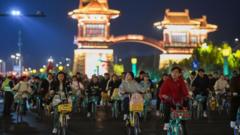
In a remarkable episode in central China, a spontaneous nighttime cycling event turned into a massive gridlock, with thousands of cyclists flooding the streets in pursuit of delectable dumplings. The trend, initially sparked by four university students, set in motion an unexpected traffic jam between the cities of Zhengzhou and Kaifeng as participants took to rented bikes for a breakfast-run of gourmet guantangbao.Originally celebrated by local government and state media, the "Night Ride to Kaifeng" quickly morphed from a local economic initiative into disarray. What started in June with a few adventurous students cycling the 50 kilometers (30 miles) blossomed into a viral sensation, drawing tens of thousands of riders from the populous region amid economic uncertainty and job scarcity. Kaifeng residents anticipated a sudden boost to their economy and even introduced special promotions for visiting college students. However, the reality was different as a six-lane expressway became a sea of bicycles, clogging the route and prompting authorities to take action. Loudspeakers requested cyclists to disperse, and bike rental companies threatened to disable hired bikes taken beyond their intended destinations.One rider, Ms. Li, noted that the atmosphere was initially vibrant, filled with youthful exuberance, but that soon transformed as congestion worsened, and police added a heavy presence to manage the flow. “There were ambulances and traffic police cars everywhere,” she recounted. The anticipated fun did not come without woes, as many cyclists experienced delays, traveling three hours instead of one. Social media reflected frustrations, with some claiming to have traveled long distances only to be unable to find transportation or accommodations when they finally arrived in Kaifeng. One student lamented on social media about the backlash faced from locals, feeling regret over the issues caused by the mass gathering.In response to the mounting chaos, bike rental platforms urged users to consider public transport for safety, signaling a shift in strategy. Moreover, restrictions on university students’ movements were reported, indicating a broader crackdown on large gatherings reminiscent of previous incidents in China where authorities have limited public festivities.Despite the setbacks, Ms. Li observed that the trend would likely resonate with young people who strive for brief escapes from their stressful realities. “Happiness is infectious, and we need these little adventures,” she opined, implying that the urge for spontaneous experiences among Chinese youth would not diminish easily even in the face of such considerable challenges.

