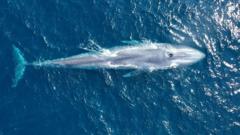
In the tranquil waters off Timor-Leste's coast, local fishermen like Faustino Mauloko da Cunha and his son Zacarias undertake a remarkable venture each year. Armed with binoculars and a telephoto camera, they search the depths of the South Pacific Ocean for the elusive pygmy blue whales. During peak migration season, which spans October to November, hundreds of these majestic creatures traverse the ocean, creating an opportunity for a breathtaking collaboration between local citizens and marine researchers.
Back in their village of Subaun, when a sighting of the whales occurs, a team is promptly mobilized. Australian marine ecologist Karen Edyvane, leading the efforts since 2014, directs drone operators to capture crucial footage from the sky. This grassroots initiative is a marvel of citizen science, as locals have collectively identified nearly 3,000 pygmy blue whales over the last decade, an achievement that Prof Edyvane labels as “truly extraordinary.”
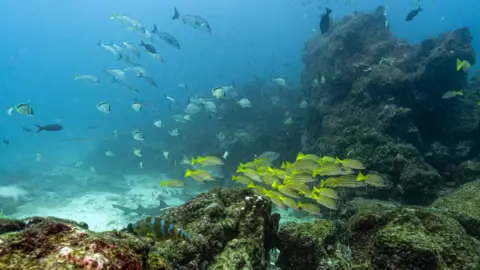
These waters host a rich diversity, making Timor-Leste a hotspot for marine mammals. Despite its potential, research in the area has lingered in the shadows for too long. Building on the enthusiasm of community members, Prof Edyvane has partnered with local fishermen, students, and dive operators to document the unique behaviors of the blue whales, revealing remarkable aspects of their lives, such as reproductive behaviors which had previously gone observed.
The project took flight from a simple Facebook group, attracting local volunteers and sparking excitement as sightings were posted in real-time. With training in new technology, including drones and telephoto equipment, locals were inching closer to fascinating whale encounters. The setting of a research station—a modest hut in front of the da Cunha's home—serves as a crucial base for monitoring the whales throughout the season and gathering memorable footage.
With the research efforts flourishing, whale watching tours have surged in popularity, impacting both tourism and the local economy. Concerns surrounding unregulated tourism are voiced by local non-profits, but the government intends to utilize Prof Edyvane's findings to aid in the conservation of marine life. The economic advantages of whale studies provide hope for raising local income levels, particularly as subsistence fishing often yields minimal revenue.
As part of their sustainability efforts, the da Cunha family has begun offering meals prepared from local ingredients to visiting students and tourists, enhancing the overall experience. Zacarias even took on drone services for the project, aiming to share their knowledge and passion for marine conservation with visitors.
This grassroots initiative highlights the power of local engagement and modern technology in expanding our understanding of blue whale life. By empowering community researchers, valuable insights into these magnificent creatures are unveiled, assuring future generations can cherish their presence in the wild.
Back in their village of Subaun, when a sighting of the whales occurs, a team is promptly mobilized. Australian marine ecologist Karen Edyvane, leading the efforts since 2014, directs drone operators to capture crucial footage from the sky. This grassroots initiative is a marvel of citizen science, as locals have collectively identified nearly 3,000 pygmy blue whales over the last decade, an achievement that Prof Edyvane labels as “truly extraordinary.”
These waters host a rich diversity, making Timor-Leste a hotspot for marine mammals. Despite its potential, research in the area has lingered in the shadows for too long. Building on the enthusiasm of community members, Prof Edyvane has partnered with local fishermen, students, and dive operators to document the unique behaviors of the blue whales, revealing remarkable aspects of their lives, such as reproductive behaviors which had previously gone observed.
The project took flight from a simple Facebook group, attracting local volunteers and sparking excitement as sightings were posted in real-time. With training in new technology, including drones and telephoto equipment, locals were inching closer to fascinating whale encounters. The setting of a research station—a modest hut in front of the da Cunha's home—serves as a crucial base for monitoring the whales throughout the season and gathering memorable footage.
With the research efforts flourishing, whale watching tours have surged in popularity, impacting both tourism and the local economy. Concerns surrounding unregulated tourism are voiced by local non-profits, but the government intends to utilize Prof Edyvane's findings to aid in the conservation of marine life. The economic advantages of whale studies provide hope for raising local income levels, particularly as subsistence fishing often yields minimal revenue.
As part of their sustainability efforts, the da Cunha family has begun offering meals prepared from local ingredients to visiting students and tourists, enhancing the overall experience. Zacarias even took on drone services for the project, aiming to share their knowledge and passion for marine conservation with visitors.
This grassroots initiative highlights the power of local engagement and modern technology in expanding our understanding of blue whale life. By empowering community researchers, valuable insights into these magnificent creatures are unveiled, assuring future generations can cherish their presence in the wild.