In brief
For the first time, detailed underwater footage of the Terra Nova, the ship made famous by Captain Scott’s South Pole expedition, has been captured. This historic vessel, which sank in 1943, is now home to a diverse ecosystem. Key features such as its wheel and mast are still visible, providing a poignant connection to the past and the tragic story of Scott and his team.
One of the most famous polar shipwrecks has been filmed in detail on the sea floor for the first time.
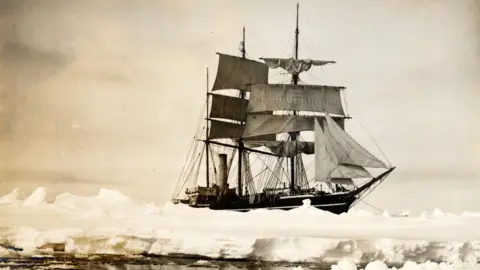
The Terra Nova carried Captain Scott and his men on their doomed expedition to reach the South Pole more than a century ago.
The British party lost the race to the pole and died on their return journey in 1912.
The footage shows the Terra Nova colonised with sea life, but key features of the wooden ship are still visible including its wheel, winch and mast.
The wreck lies 170m down off the coast of Greenland. After the polar expedition, the ship continued in service and eventually sank in 1943 while carrying supplies to US bases during World War Two.
The Terra Nova was discovered in 2012, but the new expedition has been the first opportunity to record extensive footage of the wreck.
To be able to see these significant parts of the wreck, it was truly awe inspiring, said Leighton Rolley, Science Systems Manager at REV Ocean. The wheel was sat there perfectly intact amidst the debris of the aft section of the wreck... If that ship's wheel could talk, it could tell an amazing history.
The Terra Nova was one of the finest polar vessels of its time, measuring 57m long with a wooden hull that was a metre thick in places to help it break through the sea ice. Captain Scott's men embarked to Antarctica in 1910, aiming to be the first to reach the South Pole.
After trekking hundreds of miles, the British party reached the pole in January 1912, only to find they had been beaten by a Norwegian team led by Roald Amundsen. The discovery of Amundsen's black flag at the South Pole marked the beginning of their tragic return journey filled with relentless hardships.
The new footage offers a poignant reminder of their story filled with heroism and tragedy. As David Waterhouse noted, it’s a tale rich with historical significance, showing how the ship has become a reef of life, now full of fish and corals, symbolizing a different kind of journey than originally intended.