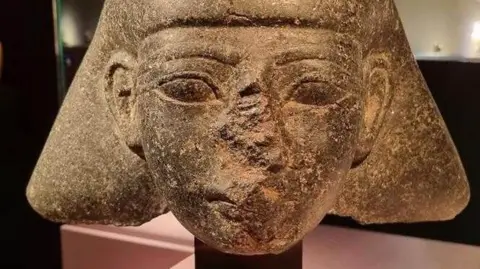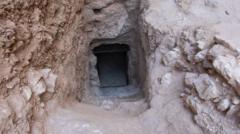
A British archaeological team has sparked excitement in the field of Egyptology with the potential discovery of a second tomb associated with Pharaoh Thutmose II, located near the ancient city of Luxor. This finding comes on the heels of Dr. Piers Litherland’s announcement of the first tomb of a pharaoh to be discovered in over a century, reigniting interest in the legacy of Ancient Egypt.
Dr. Litherland believes the new tomb may hold the mummified remains of Thutmose II, as evidence suggests the first tomb was abandoned after a flood about six years post-burial. The British-Egyptian team is cautiously excavating a site that lies beneath a 23-meter man-made structure composed of limestone and rubble, believed to resemble a mountain—a common motif in the construction of royal tombs from the era.
The initial tomb was discovered behind a waterfall, and its contents might have been relocated due to water damage, possibly by Thutmose II's half-sister and wife, Hatsheput. Dr. Litherland has stated that they are approaching the uncovering of the second tomb delicately, having abandoned tunneling efforts considered too hazardous. He anticipates that the excavation will be completed in about a month.
During the recent exploration, the team stumbled upon a burial chamber decorated in a style indicative of pharaonic grandeur—a striking blue-painted ceiling adorned with yellow stars, a hallmark of royal tombs. Expressing his astonishment, Dr. Litherland noted the profound emotional impact of such discoveries, highlighting the unexpectedness that can arise in archaeological pursuits.
Thutmose II, who ruled during the 15th century BC, is particularly notable for being the spouse of one of Egypt's most powerful female pharaohs, Hatsheput, as well as being an ancestor of the renowned King Tutankhamun. The tomb of Tutankhamun itself was uncovered by British archaeologists in 1922, making these new findings even more significant as they contribute to our understanding of Ancient Egypt's dynastic history.
As discoveries unfold in Luxor, the global community of archaeology watches closely, eager for revelations about a civilization that has intrigued humanity for millennia.