In brief
After a series of negotiations, President Trump announces a 30-day delay on tariffs affecting Mexico and Canada, leaving both nations to claim political victories. Trump aims for stricter border protections, but uncertainties about future tariffs linger, potentially impacting market stability and diplomatic relations.
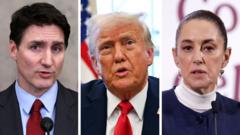
In a significant political maneuver, President Donald Trump has temporarily suspended the hefty tariffs previously threatened against Mexico and Canada, following last-minute negotiations. This 30-day delay appears to be a strategic move that allows both Trump and the leaders of the neighboring countries to declare political victories while avoiding an immediate trade war that could have destabilized the North American economy.Trump's confrontation with Canada and Mexico has seemingly yielded results, with both countries agreeing to implement stricter border security measures and take more aggressive actions against fentanyl trafficking. This aligns with Trump's "America First" agenda and allows him to address domestic concerns without inflicting the economic pain that would result from a trade war.The prospect of sweeping tariffs looms large, especially as Trump also prepares to impose a 10% tariff on Chinese goods beginning on Tuesday. However, the uncertainty surrounding future tariffs raises concerns that businesses might hesitate to invest in American markets, briefly stalling the hiring process and factory expansions until the situation clarifies.In Canada, Prime Minister Justin Trudeau and business leaders have expressed relief at the postponement of tariffs. Trudeau, in his final weeks as prime minister, has faced the challenge of negotiating concessions to satisfy Trump while managing the implications for Canada-US relations. The measures for enhanced border security, including patrolling efforts with drones and new intelligence directives focused on organized crime, reflect Canada's commitment to addressing U.S. concerns.Meanwhile, Mexican President Claudia Sheinbaum has displayed diplomatic finesse by managing to secure assurances from Trump while agreeing to send National Guard troops to combat fentanyl smuggling. Her administration views this deal as a pivotal moment to mitigate trade hostility and enhance Mexico's standing with the U.S.With the temporary tariff measures now in effect, all eyes will be on the upcoming discussions involving U.S. Secretary of State Marco Rubio and Mexican officials. Should Sheinbaum succeed in turning this temporary reprieve into a more permanent arrangement, it could become a notable achievement for her administration, which is still establishing itself after taking office.As the dust settles on these negotiations, the future of trade relations in North America remains uncertain, with leaders hoping that cooler heads will prevail and that economic ties will continue to strengthen rather than fracture.