
In brief
Prime Minister Tarique Rahman’s recent trips to Beijing and Malaysia signal a shift in Bangladesh’s foreign policy. Dhaka is actively pursuing Chinese support for critical infrastructure like the Teesta River project and a special economic zone at Mongla port, while working to restore normal trade and dialogue with New Delhi. India has lifted many restrictions on travel and trade; however, both sides still grapple with lingering tensions over border security and the status of ex‑leader Sheikh Hasina.
Bangladesh’s new government has sought greater Chinese investment and partnership to revive a stuttering economy, even as it attempts to rebalance ties with neighbouring India.
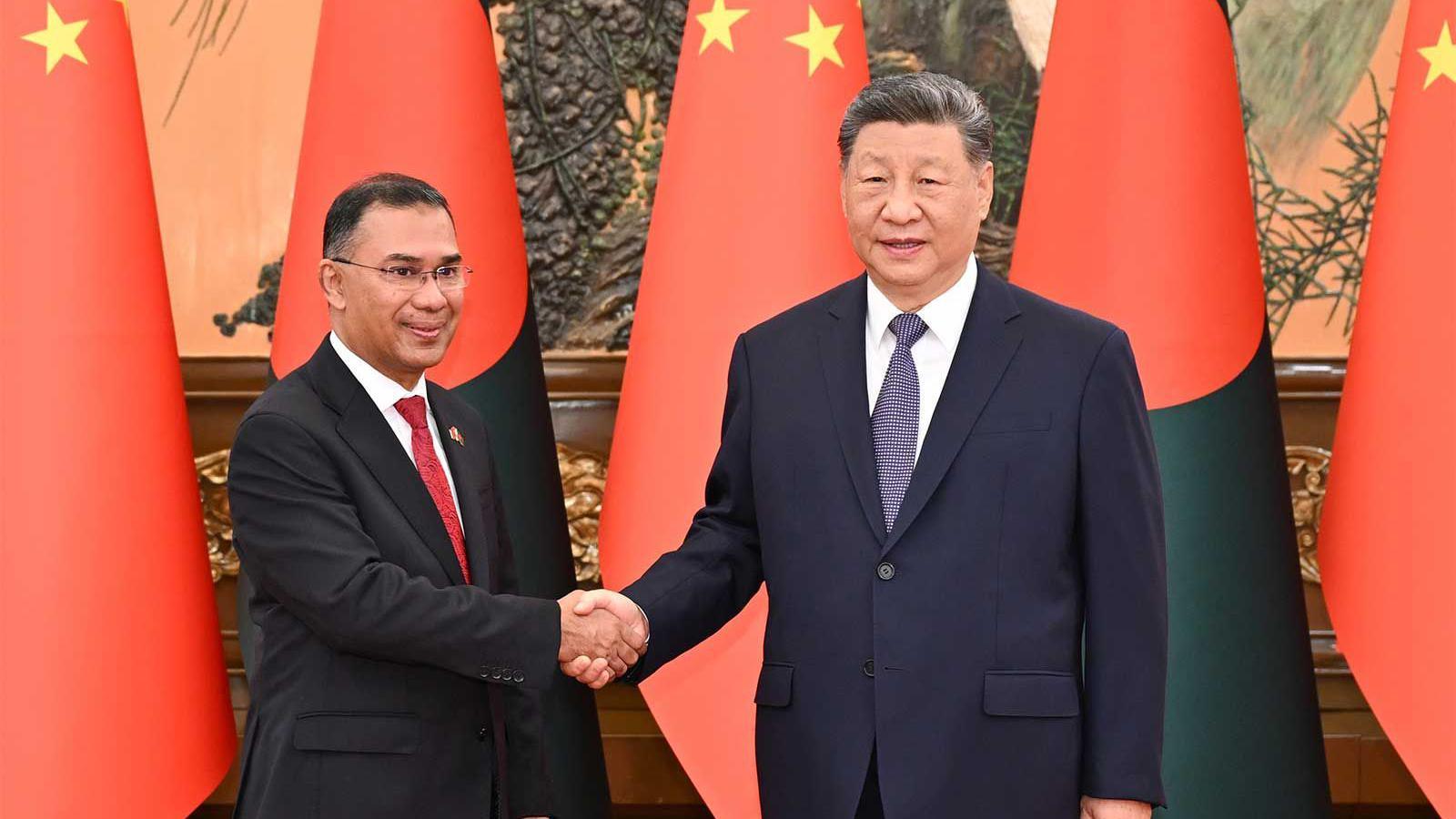
Prime Minister Tarique Rahman’s first overseas official visit took him to Malaysia and China last month, signalling Dhaka’s foreign‑policy direction.
Analysts say the choice of destinations reflects Dhaka’s effort to recalibrate its strategic priorities. While Rahman first visited Malaysia, his trip to China was seen as the more significant one.
India has historically been the traditional port of call for newly‑elected South Asian leaders; some in Delhi have viewed Rahman’s China visit as a message to Delhi, which has maintained close ties with the ousted Bangladeshi leader Sheikh Hasina.
Key agreements include a deal to develop a special economic zone near Mongla port and cooperation on managing the Teesta River – a matter closely watched by India as the two Asian giants compete for influence in Bangladesh.
Relations between Dhaka and Delhi turned frosty after Sheikh Hasina was ousted in August 2024, followed by a temporary government led by Muhammad Yunus, which imposed travel and trade restrictions.
Since Rahman’s landslide victory in February, both sides have shown signs of normalisation. Former Indian foreign secretary Shyam Saran said, "There is no doubt there has been a relative relaxation of tensions between the two countries …"
Passenger bus services between Kolkata–Dhaka and Agartala–Dhaka have partially resumed after an 18‑month gap, and India has sent emergency fuel via the Friendship Pipeline during this year’s Middle‑East crisis.
Still, disputes over border security, alleged push‑in raids by the Indian Border Security Force and recent inflammatory comments by Hindu‑nationalist politicians have delayed a full reset of bilateral relations.
China’s involvement in the Teesta project is a sensitive security issue for India. The river, shared by India and Bangladesh, has been a source of conflict; the joint technical feasibility study is a step toward resolving long‑standing water‑sharing disputes.
China, the largest defence supplier to Bangladesh and a key investor in a planned China‑Myanmar‑Bangladesh economic corridor, has assured Dhaka that projects will not involve third parties.
Balancing relations with both powers will be a delicate diplomatic task for Rahman. While Delhi seeks to strengthen ties for security reasons, the presence of the deposed Sheikh Hasina in India remains a sensitive domestic issue.
For Bangladesh, stable relations with both China and India are critical to its economic development and regional security. How the new government navigates this dual relationship will shape the sub‑continent’s political future.
