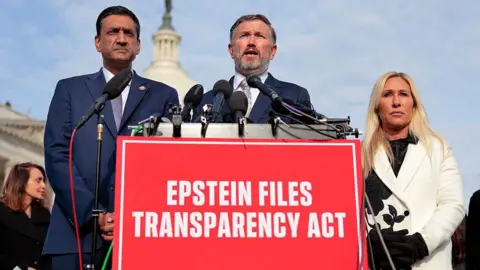
Both chambers of the U.S. Congress have agreed to order the U.S. Justice Department to release its files on late sex offender Jeffrey Epstein.
The House of Representatives overwhelmingly approved the measure with a vote of 427-1, with the Senate indicating it would pass the bill promptly.
President Donald Trump is expected to sign the measure into law, having changed his initial resistant stance to support the release following significant pushback from various constituencies.
On Tuesday, survivors of Epstein spoke in favor of the release at the U.S. Capitol, expressing feelings of institutional betrayal over how the matter has been handled.
The Epstein files encompass numerous documents collected during investigations, including victim interviews and evidence from his residences.
Senate Majority Leader John Thune noted that the Senate would likely receive the bill by Wednesday morning for a swift vote before sending it to Trump.
Despite Trump saying the timing doesn’t matter to him, he continues to label the focus on the Epstein case as a distraction from other Republican victories.
Trump's own ties to Epstein have resurfaced in discussions, especially following the release of other related documents hinting at connections to several notable figures, including Trump himself.
The bill, if signed, would compel Attorney General Pam Bondi to release all unclassified records concerning Epstein within 30 days.
Yet, this release faces potential hurdles; the bill grants Bondi the discretion to withhold information that might jeopardize ongoing investigations or endanger victim identities.
Epstein, who was found dead in his jail cell in 2019, was implicated in numerous sexual misconduct cases and was facing federal charges of sex trafficking at the time of his death.
Supporters of the disclosure bill, including its co-sponsors, Democrat Ro Khanna and Republican Thomas Massie, view the push for transparency as essential for justice and holding accountable those involved in allegedly covering up Epstein’s widespread abuse.
Many advocates insist on the urgent need for openness, stressing that the knowledge gleaned from these files could prevent further harm to potential future victims.