Ecuador has released the survivor of a US strike on a submarine alleged to have been smuggling drugs in the Caribbean.
The US military forces captured the Ecuadorean national along with a Colombian citizen after they attacked the submarine they were aboard. US President Donald Trump stated they would be returned to their respective countries for detention and prosecution.
However, the Ecuadorean Attorney General's office noted that the Ecuadorean survivor could not be detained because there were no reports of a crime brought to their attention.
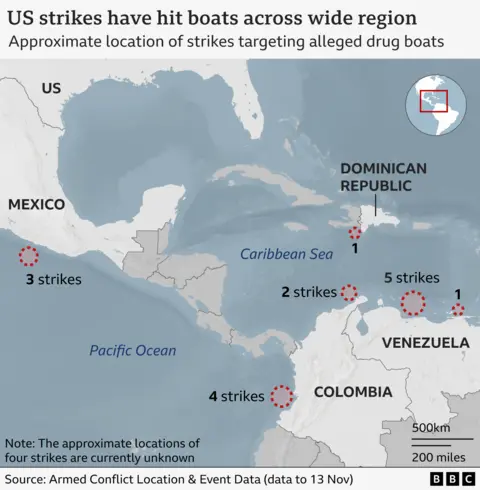
The US has recently conducted a series of strikes on what it describes as drug-smuggling vessels in the region.
Among the survivors identified was Andrés Fernando Tufiño, an Ecuadorean, and Jeison Obando Pérez from Colombia. These individuals are the first survivors of the US strikes aimed at curtailing drug trafficking in the Caribbean.
During the attack, two additional men aboard were reportedly killed, with Trump's administration claiming a total of 32 deaths occurred in various strikes since early September.
Legal experts have raised questions regarding the actions and legality of the strikes, indicating potential breaches of international law. Trump's administration defends the strikes as targeting narco-terrorists.
When discussing the two survivors, Trump asserted that they were on a drug-carrying submarine specifically built for trafficking large amounts of narcotics. He claimed the vessel was loaded with fentanyl and other illegal drugs.
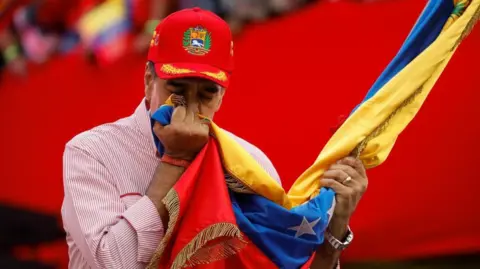
Although drug trafficking experts suggest that fentanyl predominantly enters the US through Mexico, the US military insists that their operations are crucial in combating drug trafficking from Venezuela, accusing its president Nicolás Maduro of leading a drug trafficking group.
The US military intervention involves around 10,000 troops and various military assets deployed to the Caribbean, part of an extensive counter-narcotics operation.
The Colombian survivor, Jeison Obando Pérez, was reported to have sustained serious injuries and was received in a Bogotá hospital under medical supervision, while Tufiño was released in good health.
Amidst the operations, diplomatic tensions have risen as Colombian President Gustavo Petro criticized the US strikes as illegal, especially when they reportedly occurred in Colombian waters.
In response, Trump labeled Petro a drug leader and proposed the cessation of US aid to Colombia along with possible tariffs on Colombian goods, further escalating controversy around the US intervention in the Caribbean.
}