
In brief
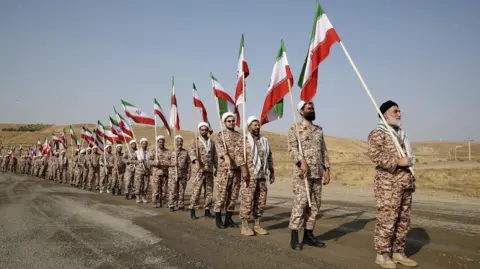
The European Union has classified Iran's Islamic Revolutionary Guard Corps (IRGC) as a terrorist organization due to its role in ongoing violence against protesters in Iran. This decision aligns the IRGC with jihadist groups like al-Qaeda and ISIS and follows a wave of deadly repression in the country. The EU's top diplomat emphasized that such acts of repression must not go unanswered, and this measure will impose sanctions meant to curtail the IRGC's operational capabilities. Human rights groups estimate that thousands have died during the recent unrest, with the EU targeting specific individuals involved in the repression.
The European Union has added Iran's Islamic Revolutionary Guard Corps (IRGC) to its terrorist list in response to Tehran's deadly crackdown on protesters in recent weeks.
The bloc's top diplomat Kaja Kallas stated that EU foreign ministers took the decisive step because repression cannot go unanswered. She noted that the IRGC, a major military, economic, and political force in Iran, is now classified similarly to jihadist entities like al-Qaeda and ISIS.
Human rights organizations estimate that thousands of protesters have been killed by security forces, including the IRGC, during weeks of unrest in December and January, prompting this significant action from the EU.
Speaking in Brussels, French Foreign Minister Jean-Noel Barrot condemned the violence as the most violent repression in Iran's modern history, stating that there could be no impunity for the crimes committed. France's unexpected support for the blacklisting of the IRGC, which was previously hesitant, reflects a growing consensus among EU nations about the need to respond decisively to Iran's actions.
Kallas emphasized that any regime that kills its own people is on a path toward its demise. She also expressed hope that diplomatic channels with Iran could remain open despite the new sanctions.
With the IRGC's designation comes a range of sanctions, including asset freezes and travel bans aimed at dismantling support networks. This move places additional pressure on a regime already facing significant internal dissent and international scrutiny.
The IRGC, established shortly after the 1979 revolution, plays a pivotal role in Iran's military and political landscape, boasting around 190,000 personnel and overseeing critical military capabilities. Additionally, the EU has targeted six entities and 15 individuals, including high-ranking officials, for their involvement in the violent repression of protests.
While Australia, Canada, and the US have already classified the IRGC as a terrorist entity, the UK has yet to follow suit, maintaining a cautious approach to its diplomatic relations with Iran amid rising tensions.

