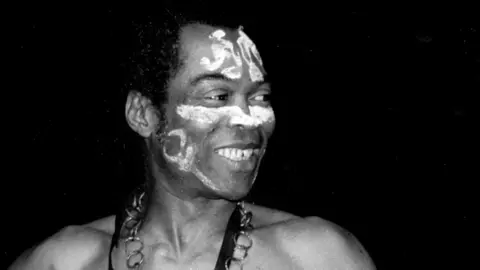
Long crowned by his legion of fans as the king of Afrobeat, the late Fela Kuti is finally being recognized by the global music industry.
The Nigerian star will posthumously receive a Lifetime Achievement Award at the Grammys - almost three decades after his death at the age of 58.
Fela has been in the hearts of the people for such a long time. Now the Grammys have acknowledged it, and it's a double victory, his musician son Seun Kuti tells the BBC.
It's bringing balance to a Fela story, he adds.
Rikki Stein, a long-time friend and manager of the late musician, says the recognition by the Grammys is better late than never. Africa hasn't in the past rated very highly in their interests. I think that's changing quite a bit of late, Stein tells the BBC.
Following the global success of Afrobeats, a genre inspired by Fela's sound, the Grammys introduced the category of Best African Performance in 2024. This year, Nigerian superstar Burna Boy also has a nomination in the Best Global Music Album category.
But Fela Kuti will be the first African to receive a Lifetime Achievement Award, albeit posthumously. The award was first presented in 1963 to American singer and actor Bing Crosby.
Other musicians who will receive the award this year include Mexican-American guitarist Carlos Santana, Chaka Khan, the American singer known as the Queen of Funk, and Paul Simon.
Fela Kuti's family, along with friends and colleagues, will be attending the Grammys to receive his award. The global human tapestry needs this, not just because it's my father, Seun Kuti tells the BBC.
Stein emphasizes Fela's commitment to social justice, stating, It would be impossible to ignore that aspect of Fela's legacy.
Fela Kuti pioneered the Afrobeat genre, blending West African rhythms with jazz and funk, and his music continues to influence artists globally.
Throughout his career, Fela released over 50 albums and protested Nigeria's political corruption, often facing harsh reprisals for his truth-telling.
His legacy, which includes powerful performances that combined music with political activism, is now immortalized with this Grammy acknowledgment, solidifying his role as a cultural icon.