In brief
A month after a decisive east‑German state election win, the far‑right Alternative for Germany (AfD) secured the speaker post in Saxony‑Anhalt’s parliament. Tobias Rausch, backed by nine MPs from other parties, took office amid a wave of demonstrations demanding that the post be protected from extremist influence. Critics label the AfD as pro‑Russian, anti‑immigrant and extremist, while the parliament’s Greens and other parties call the move a watershed moment. The event marks the first post‑war instance of a far‑right party chairperson in a German legislature.
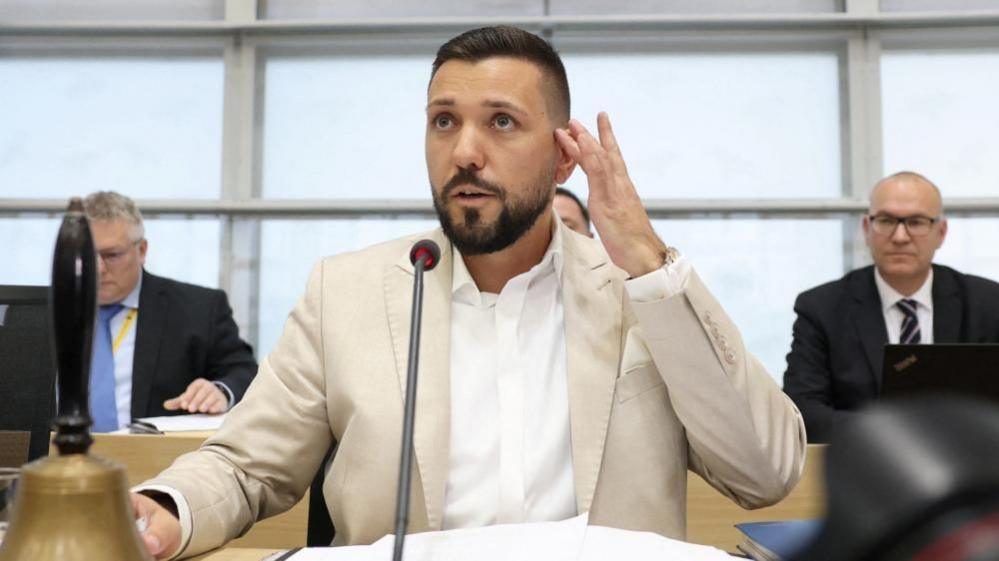
In Saxony‑Anhalt, the Alternative for Germany party has passed a historic milestone. A month after securing a decisive win in the state election, the AfD’s candidate Tobias Rausch was elected speaker of the regional parliament by a vote of 59 to 9.
For the first time since World War Two a far‑right party has built a leadership position within a German legislative body. Protesters outside the building in Magdeburg rallied with banners that read Never again is now, showing how deeply the nation divides over the AfD’s influence.
Rausch, 35, is a ten‑year member of Parliament and a close aide of local AfD chief Ulrich Siegmund. He won the speaker’s chair with the backing of nine MPs from other parties – eight from the hard‑left Workers & Socialists (BSW) and one unidentified MP. While CDU members abstained as agreed, some speculation remains that four unknown MPs may have back‑stopped him.
The post is largely ceremonial; Rausch will steer debates, determine access to the parliament’s halls and represent the body at official functions. Nevertheless, his election underpins a broader strategy by the AfD to move from fringe to the political centre.
Politicians who oppose the AfD accuse the party of fostering extremist ideas, a view that the voice of the domestic intelligence agency also labels as “right‑wing extremist.” Chief among the critics is Susan Sziborra‑Seidlitz, the Greens leader, who warned that a line has been crossed and vowed not to be intimidated by the new speaker’s presence.
Across Saxony‑Anhalt, more than 300 demonstrators gathered outside Parliament to voice dissent about the AfD’s increased power. Neither the AfD nor the regional council have confirmed any support from the conservative CDU, who have stated they will not work with the party.
Rausch’s victory remains a symbolic signpost, signalling how far the political landscape is shifting in Europe. Whether this shift democratises discourse or further entrenches polarisation remains to be seen, but the ceremony has already drawn attention on a global scale.