In brief
A commemorative reunion of Auschwitz survivors underscores the importance of remembrance at 80 years since their liberation.
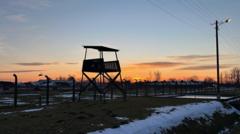
About 50 survivors of the Auschwitz-Birkenau death camp in Poland have come together to mark the 80th anniversary of its liberation on January 27, 1945. The survivors, many now in their late 80s and 90s, will be joined by dignitaries including King Charles III, French President Emmanuel Macron, and German President Frank-Walter Steinmeier. However, it is the testimonies of the survivors themselves that carry the most significant weight during the memorial— a powerful reminder of the atrocities that occurred where 1.1 million people, predominantly Jews, were murdered. One survivor, Jona Laks, now 94, shared her poignant reflection on her harrowing past in Auschwitz, stating, "Every soul on this earth has the right to live," emphasizing the grave responsibility to share these tragic stories to ensure they are never forgotten. She believes her experiences illustrate how Auschwitz was a brutal "laboratory for killing people," showcasing the sheer horror of what took place. After a severe winter, a heated tent has been set up at the "Death Gate," the entrance to Birkenau, where many of the frail attendees will gather for solace and remembrance while wreaths are laid at significant sites.The commemorations will commence with a somber laying of wreaths by survivors and Polish President Andrzej Duda at the "Death Wall," where thousands of prisoners met their end. The gathering signifies not just the memory of the fallen but also serves as a potent reminder in today's climate, where rising far-right movements pose threats to tolerance and historical acknowledgment. Historian Susanne Willems, observing the anniversaries over decades, stresses the responsibility of this generation to hear and honor the voices of survivors, conveying the message that they must not let the past repeat itself.Despite the solemnity of the occasion, there will be no speeches from international leaders, and the absence of a Russian delegation marks a significant political climate shift since the camp’s liberation. The Nazis established extermination camps, including Auschwitz, in 1942 to eradicate Europe’s Jewish population; Birkenau became notorious for the systematic extermination of Jewish people—where at one point, 12,000 individuals were killed daily. Student tours at the site over the weekend reflected a poignant engagement with history, as young visitors expressed profound realizations about the scale of suffering experienced at the camp. Their comments reinforce the continuing importance of Holocaust education amidst rising antisemitism and nationalist sentiments in contemporary Europe.Liliana Segre, Italy’s prominent Auschwitz survivor, will not attend the Polish events but will instead commemorate in Rome, highlighting her own ongoing struggle against antisemitism. In a climate where hate speech and discrimination are on the rise, the shared experiences and memories of survivors become even more essential. Their voices echo the collective call for remembrance—honoring not just the victims but also advocating for a world where such horrors are prevented from recurring.