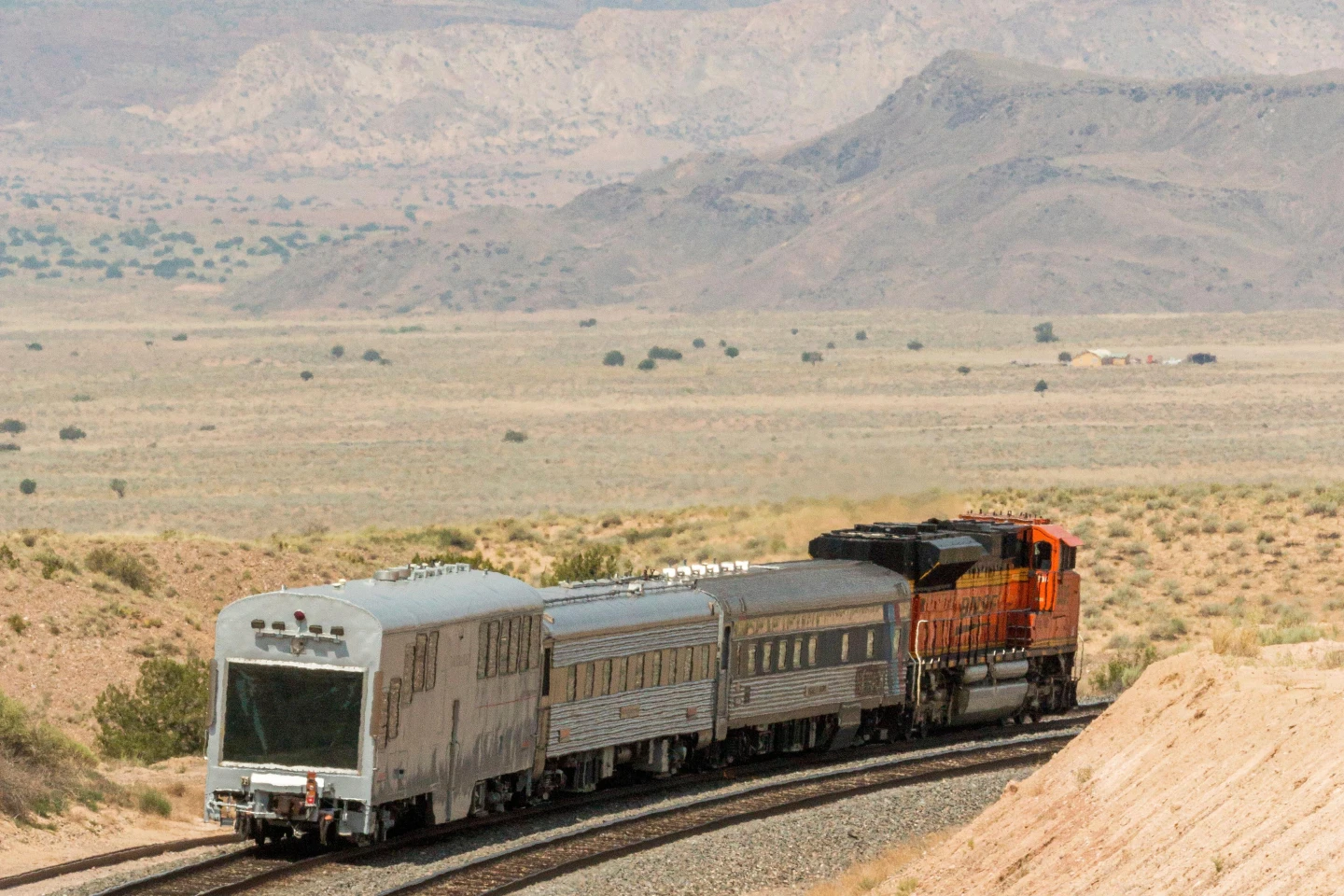
The nation’s freight railroads will soon rely more on technology for track inspections after the federal government approved a waiver on Friday, allowing for reduced human inspection frequency. In a request facilitated by the Association of American Railroads, railroads argued that modern automated inspection technologies are proficient in identifying track issues early, thus diminishing the necessity for frequent physical inspections. They referenced tests conducted by BNSF and Norfolk Southern which suggested that, despite reducing human inspections from twice weekly to bi-monthly, safety improved.
The Federal Railroad Administration’s decision allows railroads to cut back inspections to once weekly but requires that serious defects be addressed immediately and all issues within 24 hours. Unions representing track inspectors have expressed concerns, stating that automated systems cannot detect all types of problems, such as shifting ballast or vegetation encroachment. Brotherhood of Maintenance of Way Employes Division President Tony Cardwell voiced skepticism, highlighting that simple visual inspections can uncover everyday defects that machines may overlook.
While railroads assert that the performance metrics captured by automated inspections reflect the condition of the tracks, the union argues that frequent human inspections habituate inspectors to their environment, enhancing their ability to notice subtle changes. Railroads have claimed that their automated systems outperformed manual inspections, citing higher defect discovery rates while maintaining that even reduced inspection schedules will still allow for immediate responses to severe weather incidents.
Overall, the growing reliance on automation in track inspections poses a critical balancing act between technological advancements and the traditional methods of ensuring rail safety.
The Federal Railroad Administration’s decision allows railroads to cut back inspections to once weekly but requires that serious defects be addressed immediately and all issues within 24 hours. Unions representing track inspectors have expressed concerns, stating that automated systems cannot detect all types of problems, such as shifting ballast or vegetation encroachment. Brotherhood of Maintenance of Way Employes Division President Tony Cardwell voiced skepticism, highlighting that simple visual inspections can uncover everyday defects that machines may overlook.
While railroads assert that the performance metrics captured by automated inspections reflect the condition of the tracks, the union argues that frequent human inspections habituate inspectors to their environment, enhancing their ability to notice subtle changes. Railroads have claimed that their automated systems outperformed manual inspections, citing higher defect discovery rates while maintaining that even reduced inspection schedules will still allow for immediate responses to severe weather incidents.
Overall, the growing reliance on automation in track inspections poses a critical balancing act between technological advancements and the traditional methods of ensuring rail safety.