
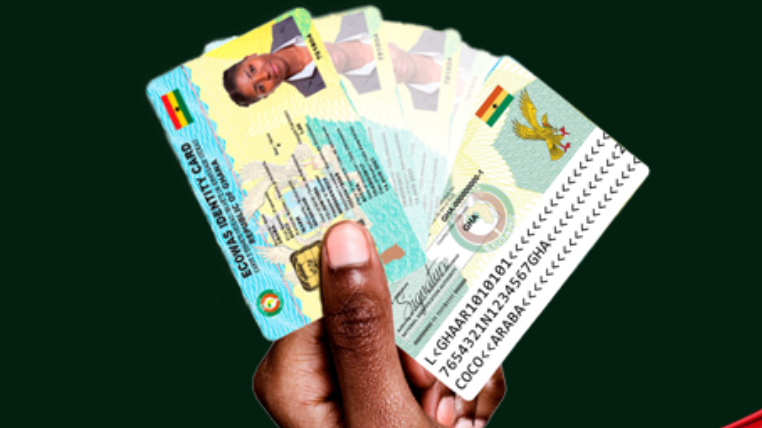
In brief
Ghana’s National Identification Authority (NIA) has introduced a new rule banning the photocopying and visual inspection of Ghana Cards. Every business, bank, telecom provider and government agency must now use a mobile biometric app to confirm the authenticity of the card, which contains fingerprints, iris scans, a photo and signature. Violations can attract fines up to 24,000 Ghanaian cedis for organisations and 6,000 for individuals. The NIA urges immediate compliance and will brief the public on implementation. This move is part of a broader crackdown on identity fraud in the country.
Following a new directive from the National Identification Authority (NIA), photocopying and visual examination of Ghana Cards are now prohibited for all businesses and institutions. The cards, which serve as the nation’s primary biometric identity documents, contain fingerprints, iris scans, a photograph and the holder’s signature.
To verify identity, organisations must employ a mobile app that scans the card and cross‑checks the embedded biometric data with the NIA’s database. Failure to comply will be a punishable offence, with fines of up to 24,000 Ghanaian cedis (about $2,100) for entities and 6,000 cedis (about $525) for individuals.
The NIA’s chief, Wisdom Yayra Koku Deku, stated, "Biometric verification is mandatory now. Any use of photocopies or visual checks is unlawful and will lead to prosecution." The authority has called on all organisations not yet connected to its digital identity service to set up the verification system immediately.
Ghanaians will soon receive public briefings detailing the changes and how to implement the new app. The move aims to eliminate identity fraud that has enabled impersonation and financial abuse.
Readers can explore how the new app will work on their mobile devices: the app displays a virtual overlay of the card image and automatically scans the biometric marks, providing instant confirmation. This is part of a broader effort to integrate augmented reality (AR) tools for security verification.
For further details, visit the NIA website or consult the updated guidelines released on 16 July 2026.

