
In brief
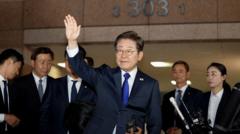
As South Korea's newly elected president, Lee Jae-myung, steps into office, he confronts a situation shaped by economic vulnerability and strained international relations, particularly with the US under Donald Trump.
South Korea has welcomed new leadership with Lee Jae-myung's recent election victory, securing nearly half of the votes amidst national distress over the impeachment of former president Yoon Suk Yeol. Lee's immediate entry into office, circumventing a standard transition period, comes not only with promises of democratic enhancement but also with urgent demands, notably from the international front.The new president faces a substantial threat to South Korea's economy and security due to tariffs imposed by Trump in April, which have the potential to destabilize the already faltering South Korean economy. A senior advisor has warned that these tariffs could trigger widespread economic turmoil, further compounding the consequences of prior chaotic governance.Economic stability aside, Lee's administration is influenced by geopolitical dynamics as the US guarantees South Korean security through a military presence, which includes 28,500 troops stationed in the region. However, Trump's sentiment of linking trade negotiations to military support has raised alarms in Seoul about the reliability of this alliance.Past discussions saw Trump questioning the necessity of US forces in Korea, setting a precedent that may compel South Korea to take on increased defense responsibilities while navigating pressures surrounding its relations with China. President Lee's cautious stance on China's geopolitical tensions adds another layer of complexity to these negotiations.Former diplomats express concern that the difference in approach between Lee and Trump—especially as Trump appears more transactional—could create significant rifts that jeopardize peace in Northeast Asia. Observations indicate a North Korean regime emboldened by shifting regional sentiments which might leverage its capabilities due to external crises exacerbated by political standoffs.As negotiations loom, experts suggest that Lee's focus should be to assert South Korea's indispensable role as an ally, emphasizing its valuable assets, such as in the shipbuilding sector, which may offer leverage in negotiations with the US. Lee's strategy will consequently be critical to navigating a potentially tumultuous political landscape marked by both domestic dissent and global pressure.
