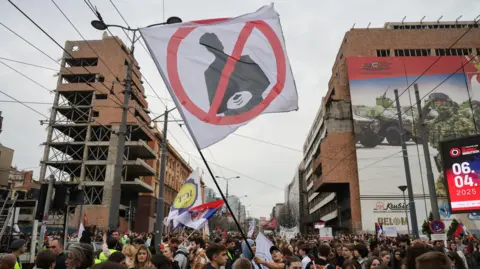
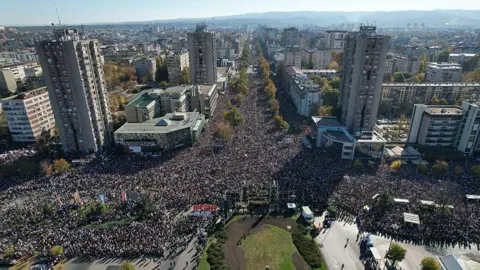
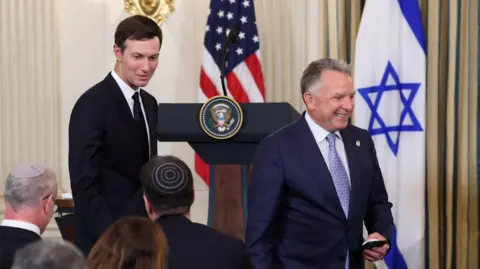
Over the past year, the Trump family has been actively pursuing new real estate ventures, often backed by foreign governments, raising considerable ethical dilemmas. However, one specific project has ignited a substantial public outcry and initiated a criminal investigation into local officials. This incident revolves around a controversial hotel development deal in Serbia, championed by Jared Kushner, President Trump’s son-in-law.
Kushner's ambitious project involves the construction of a half-billion-dollar hotel and apartment complex in Belgrade's heart. It is noteworthy that the hotel will be under the Trump brand, managed by President Trump's sons, Eric and Donald Jr. The project's momentum gained significant speed following the Serbian government's decision in November to deregulate the site, which is currently a bombed-out building reflective of the country’s tumultuous past during the 1999 conflict, stripping it of its cultural protection status.
This governmental move faced intense backlash from local architects and historians associated with the Republic Institute for the Protection of Cultural Monuments. They argued that the legality of such a decision could only be determined through a proper assessment process, which was evidently bypassed. The organization quickly objected, emphasizing that the site's historic preservation requires a thorough review, which they were denied.
Former deputy director of the institute, Estela Radonjic Zivkov, stated, "From the beginning, we knew it was a political decision," highlighting the pressure she faced from intelligence agencies not to oppose the project, which indicated the government's vested interests. Nevertheless, Zivkov chose to resist the intimidation, indicating a significant tug-of-war between local preservation efforts and influential foreign investments.
Kushner's ambitious project involves the construction of a half-billion-dollar hotel and apartment complex in Belgrade's heart. It is noteworthy that the hotel will be under the Trump brand, managed by President Trump's sons, Eric and Donald Jr. The project's momentum gained significant speed following the Serbian government's decision in November to deregulate the site, which is currently a bombed-out building reflective of the country’s tumultuous past during the 1999 conflict, stripping it of its cultural protection status.
This governmental move faced intense backlash from local architects and historians associated with the Republic Institute for the Protection of Cultural Monuments. They argued that the legality of such a decision could only be determined through a proper assessment process, which was evidently bypassed. The organization quickly objected, emphasizing that the site's historic preservation requires a thorough review, which they were denied.
Former deputy director of the institute, Estela Radonjic Zivkov, stated, "From the beginning, we knew it was a political decision," highlighting the pressure she faced from intelligence agencies not to oppose the project, which indicated the government's vested interests. Nevertheless, Zivkov chose to resist the intimidation, indicating a significant tug-of-war between local preservation efforts and influential foreign investments.