
In brief
Former Bank of England governor Mark Carney's emphasis on Canadian sovereignty and international solidarity shapes a new diplomatic era.
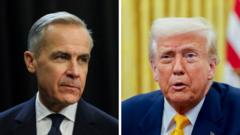
Mark Carney's recent appointment as Prime Minister of Canada comes at a crucial intersection of trade and political tensions, particularly with the United States under Donald Trump's influence. Carney, often labeled the "anti-Trump," made a significant impression with his inaugural speech, condemning the U.S. president's strategies as detrimental to trustworthiness. He proudly stated that Canadians have resisted Trump’s policies "with their wallets," making it clear that his administration would adopt a firm stance against American economic aggression.At the forefront of Carney's agenda is a promise to maintain retaliatory tariffs against the U.S. until there is mutual respect. Trump's proposals to absorb Canada more fully into the United States have been met with staunch opposition from Carney, who firmly declared, "Canada will never be part of America in any way, shape or form." His stance represents a pivotal moment in Canadian politics, emphasizing national sovereignty in the face of external pressures.Carney, known for his robust economic background, has subtly urged for a united front against Trump’s policies. During an exclusive interview, he dismissed Trump's accusations against Canada regarding the fentanyl crisis and challenged the narrative that Canada is at fault for trade imbalances. He asserted that Canada's trade deficit is rooted in subsidies provided to oil exports by the U.S., suggesting it is time to renegotiate these terms.His emergence as Prime Minister follows the paths of other central bank leaders, such as Mario Draghi of Italy, indicating a trend where economic expertise might steer political tides. Carney's past experiences, including diverse global financial crises, prepare him for the complex landscape of trade negotiations. He remembers his time at G20 meetings, where he witnessed Trump’s unpredictable nature firsthand, and he believes that respecting power is vital in negotiations.While the next Canadian election is set for October, Carney hinted at the potential for an earlier vote, claiming readiness to host Trump at the upcoming G7 Summit in June. This situation could tilt the balance for the UK, which has been attempting to maintain close ties with Washington. A more assertive Canada, steered by Carney, could reshape Commonwealth dynamics, encouraging trade diversification toward allies like the UK and EU, especially considering Carney's desire to strengthen international alliances.Carney’s vision is deeply rooted in the principles of multilateralism and coherence in international relations. He firmly stated that Canada should not only rely on its capabilities but also foster a collective response to address threats from the U.S. Moving forward, Canada expects backing from the UK, as highlighted by Carney’s reference to King Charles during an informal discussion. This collaboration signals a possible revitalization of Commonwealth leadership aligned against emerging global challenges.


