
In brief
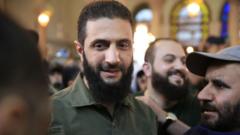
As Syria grapples with its tumultuous past and uncertain future, Ahmed al-Sharaa emerges as a pivotal leader. While he pledges to cultivate a politically inclusive environment, doubts linger about his intentions and the feasibility of restoring stability in a war-torn country haunted by violence, corruption, and foreign intervention.
The journey through Syria has taken a harrowing turn with fresh leadership amidst the rubble of conflict. After a recent visit to Damascus, it became apparent that Ahmed al-Sharaa, known for his formerly radical ties, is now at the helm, striving to steer a fractured nation towards reconciliation and reconstruction.The fall of Aleppo just two weeks prior seemed to promise a renewed wave of fighting. However, Bashar al-Assad's regime appeared unprepared, as evident in the rapid disintegration of loyalist forces in Homs. Instead of the expected scenes of violent confrontation, Al-Sharaa found himself celebrating with rebel fighters, who filled the streets of Damascus with jubilation—an ironic twist for a man who once fought against the very leadership he now aims to replace.Al-Sharaa's arrival at the presidential palace symbolizes a shift towards an uncertain future. While he claims to have outgrown his radical past, skepticism remains rampant. Critics question whether his notion of a more inclusive Syria will translate into real freedoms for women and minorities, as tensions between progressive and conservative forces simmer beneath the surface.The fears are palpable: murmurs of extremism resurface with the actions of his followers. Reports of women being pressured to conform to strict dress codes raise concerns about a potential regression in social freedoms, stirring controversy among the populace. Despite al-Sharaa's assurances about gender equality in education, he sidesteps definitive answers about the future of women's rights under his rule.Despite the ongoing internal struggle, there’s a pressing recognition that Syria's future prospects hinge on international perceptions and sanctions. Al-Sharaa contemplates lifting these economic restrictions, which, while initially aimed at the Assad regime, now affect the very people he claims to liberate.Yet, external political dynamics complicate this landscape further. The Syrian conflict's complexities are underscored by the presence of foreign powers, including the US and Turkey, with their interests coalescing around local factions. Al-Sharaa acknowledges the geopolitics at play, asserting that Syria will not pose threats to its neighbors, particularly Israel, which continues to assert its dominance in the region.As al-Sharaa navigates the delicate balancing act of governance, he faces the daunting task of transitioning from a rebel leader to a ruler capable of fostering peace in a land ravaged by past grievances and external manipulation. The struggle for legitimacy, justice, and the restoration of civil order remains fraught with peril. His pledge to build a new Syria resonates, yet whether these promises can be fulfilled amid pervasive skepticism and underlying tensions remains to be seen.

