Archaeologists made a groundbreaking discovery of a royal tomb belonging to Pharaoh Thutmose II, west of Luxor, Egypt’s Ministry of Antiquities reported this week. This significant find marks the first excavation of a royal tomb since the famed King Tutankhamun was interred over a hundred years ago.
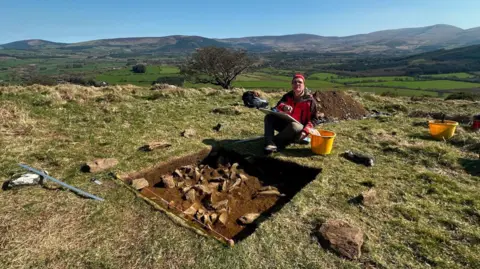
Thutmose II, who is thought to have reigned around 1480 B.C., is now linked to what has been described as “the last missing royal tomb of the 18th Dynasty.” The excavation, a collaborative effort between Egyptian and British researchers, commenced in 2022, leading to the discovery of the tomb’s entrance and main corridor.
Initially, archaeologists speculated that this tomb could belong to a royal consort due to its proximity to the burial sites of royal wives, including Hatshepsut, who ascended to the throne following Thutmose II’s death. The tomb's location was unexpectedly situated beneath two waterfalls and at the base of a slope, an unusual choice for a pharaoh's burial during the seemingly wetter conditions of the 15th century B.C.
Despite these initial assumptions, findings within the burial site confirmed its identity as a royal tomb. Archaeologists discovered alabaster fragments inscribed with the identity of Thutmose II as the “deceased king,” alongside carvings referencing Hatshepsut. Notably, parts of the ceiling remain intact, featuring blue paint adorned with yellow stars—an artistic detail exclusive to the tombs of kings.
This significant find sheds light on ancient Egyptian burial traditions and further enriches the narrative of its royal lineage.