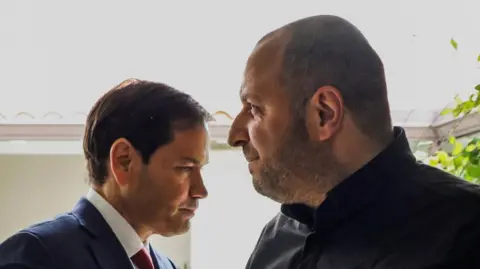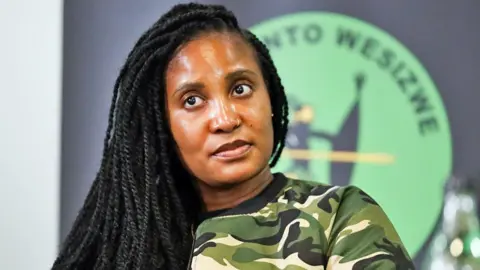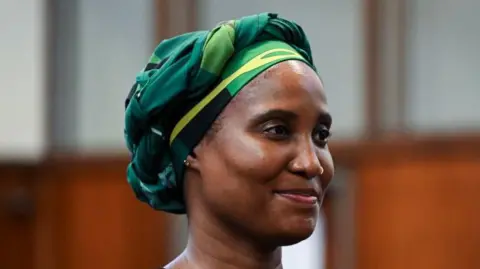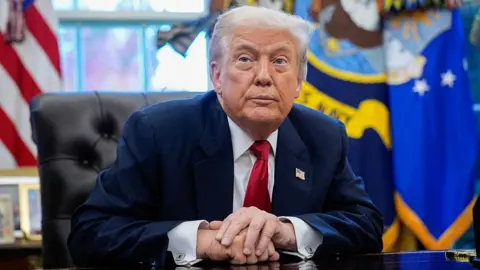
The United States has taken the extraordinary step of declaring South African Ambassador Ebrahim Rasool, a prominent diplomat in Washington, as "persona non grata." Secretary of State Marco Rubio made this announcement via a post on social media platform X, in which he accused Rasool of harboring hatred for the U.S. and its former President Donald Trump. Rubio labeled Rasool a "race-baiting politician" and stated emphatically that the U.S. had nothing further to discuss with him.
This rare diplomatic action comes amid escalating tensions between the two nations, which have seen their relations sour significantly since Trump took office. In Rubio's post, he linked to statements made by Rasool during a recent online lecture where he criticized Trump’s administration and addressed the evolving demographics of the U.S. electorate, suggesting that the MAGA movement was a response to these demographic shifts.
The implications of this expulsion are serious, as it is unusual for a country to expel a foreign ambassador. Given the historical context, the Associated Press noted that during the heightened tensions of the Cold War, neither the U.S. nor Russia resorted to such measures against each other's ambassadors. The decision follows an executive order issued by Trump last month that froze assistance to South Africa, citing "egregious actions" and "unjust racial discrimination."
Rubio’s bold stance against Rasool echoes a growing frustration in U.S. diplomatic circles regarding South Africa's policies, particularly regarding land expropriation laws, which the U.S. government contends unfairly target white Afrikaners—descendants of Dutch settlers. While South Africa's government denies that these laws are racially motivated, the White House insists that the country "blatantly discriminates" against minority groups.
Despite his diplomatic roles, Rasool's past experiences—such as being forcibly evicted from a designated white-only apartment as a child in Cape Town—have significantly shaped his political views and criticisms of inequality. This current diplomatic fallout signals a potential shift in how global relations are navigated, and it underscores the complexities of U.S.-Africa relations at a politically charged moment.