In brief
In the face of poverty and danger, Somali smugglers navigate treacherous routes to bring alcohol into the capital, Mogadishu. Their stories reveal a harsh reality filled with risks, violence, and the daunting burden of survival.
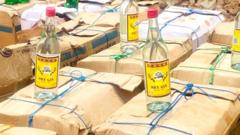
Alcohol smuggling in Somalia has become a desperate lifeline for those struggling to support their families amidst ongoing economic hardship. Guled Diriye, a 29-year-old smuggler, recounts the exhausting and perilous journey he undertakes from the Ethiopian border to Mogadishu. After a recent trip, he slumps in a chair, overwhelmed by fatigue and haunted by memories of violence. In a country where alcohol is illegal according to Sharia law, the growing demand, especially among youth, fuels the smuggling trade.Mr. Diriye was introduced to smuggling by a childhood friend after losing work as a minibus-taxi driver. With the rise of rickshaws, he turned to transporting illicit alcohol. He began his journey picking up boxes in the city, leading him to navigate the borders while managing armed checkpoints. Despite being aware of the dangers and the legality of his actions, he feels compelled to continue due to dire economic conditions.The smuggling operation includes journeys through various Somali towns, where tribal elders express concerns over alcohol-related crimes. Mr. Diriye speaks of a network where alcohol moves from Ethiopia's capital, Addis Ababa, into Somalia. Notably, the town of Galdogob serves as a trade hub where alcohol-related violence has become frequent.Rather than just transporting food, smugglers often carry alcohol on their vehicles, with concealing it as a priority. This dangerous job is fraught with risks from armed groups, including al-Shabaab, who patrol borders and conduct frequent roadblocks. Smugglers rely on local knowledge, using clan affiliations to negotiate safe passage through treacherous territories littered with landmines.Another smuggler, Dahir Barre, reflects on years of smuggling since 2015, citing worsening living conditions as the impetus. He recalls his previous job in hotel security, which exposed him to constant danger for minimal pay. Today, smugglers must face the ever-present threat of al-Shabaab, who impose harsh penalties for contraband. Though dangerous, the promise of higher returns has kept them in the trade.It takes about a week to transit from the Ethiopian border to Mogadishu; upon arrival, alcohol is transferred to local dealers. Mr. Diriye thinks often of how the trade began and the risks associated, noting how a friend who introduced him to smuggling stopped after losing a family member. He contemplates the dangers yet feels unable to abandon the trade, aligning his survival with the ominous realities he faces.In his words, “Death is something that is predestined,” illustrating a grim acceptance of the risks that define life for smugglers in Somalia.