
In brief
A BBC/NPR probe uncovered that Bassam al‑Hassan, a former Syrian general linked to the chemical weapons programme and crimes against humanity, is receiving protection and financial support from U.S. and Lebanese authorities. The arrangement—catering to his willingness to share information about the 2012 abduction of U.S. journalist Austin Tice—has sparked outrage, with the Tice family demanding his return to face trial. While the FBI has confirmed only that it seeks facts about Tice’s disappearance, no overt cooperation with the U.S. agencies has been documented. Syrian officials and other regime insiders who were tied to the Tice case are reported to have found refuge abroad, raising questions about the scope and future of these covert deals.
Ex‑Syrian general Bassam al‑Hassan, wanted for crimes against humanity, is receiving shelter and financial support from U.S. and Lebanese authorities, a BBC investigation reports.
Al‑Hassan, who oversaw Syria’s chemical weapons programme and served as a senior adviser to former President Bashar al‑Assad, fled the country after the regime’s fall in early 2024. Sources say the U.S. Federal Bureau of Investigation (FBI) and the Central Intelligence Agency (CIA) authorised his stay in Lebanon in exchange for information about the 2012 abduction of American journalist Austin Tice.
The BBC and NPR found that the U.S. and Lebanese security services – through an intermediary that channels payments to al‑Hassan – have provided him with a comfortable life. Al‑Hassan supplied details that Tice was executed on orders from Bashar al‑Assad, turning the search into a “planned operation” that included a secret meeting between U.S., Lebanese and Syrian officials.
Syrian government spokespeople say they want al‑Hassan brought back for trial; U.S. agencies insist they focus on securing Tice’s return and verifying his claims. Al‑Hassan’s testimonies have been questioned by investigators in light of a search that uncovered no physical evidence of Tice’s burial site.
Other regime insiders linked to the Tice case, such as Mohammad Makhlouf and Sakr Rustom, are also believed to be living abroad. The situation has raised diplomatic tensions, with the Tice family describing the U.S. as “aiding and abetting” a war criminal.
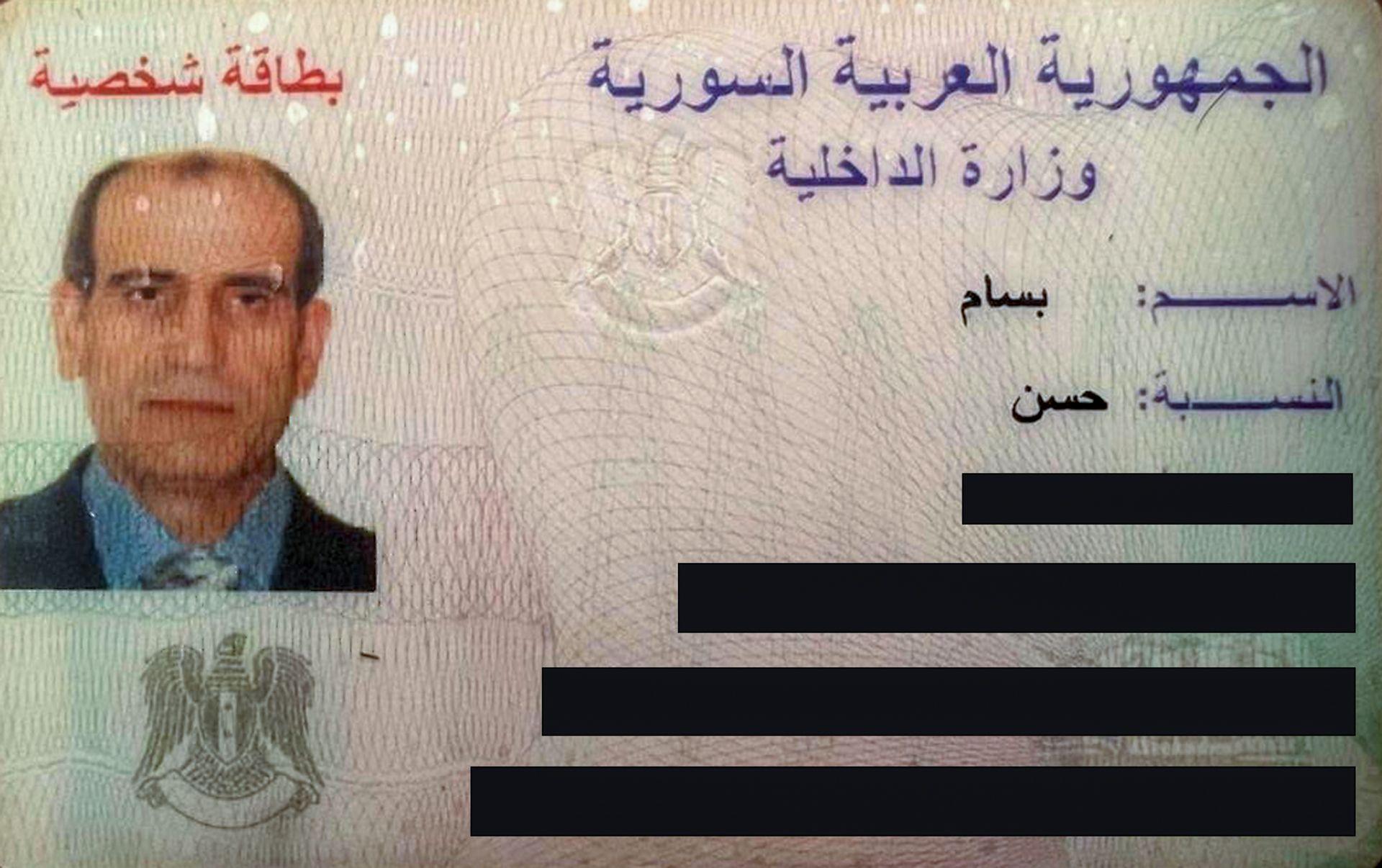
Image: ID card of Bassam al‑Hassan, showing his name in Arabic and Germanic script, redacted for privacy.
Alt: ID card showing Bassam al‑Hassan wearing a navy suit, blue shirt, and dark hair, accompanied by Arabic writing and a crest.
