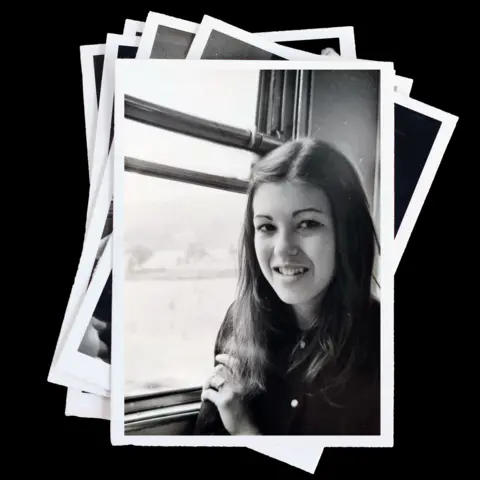
Marina Freixa always knew there was something dark and unspoken about her family. Her mother, Mariona Roca Tort, had grown up under Spain's decades-long dictatorship, which ended in 1975, but the details of her childhood were hazy. Everything changed one Christmas a decade ago when Marina was about 20.
That winter's evening around the table, with a cloud of cigarette smoke suspended in the air and wine glasses drained, Mariona began to share her story. My parents reported me to the authorities, she told them. They put me in a reformatory when I was 17. Reformatories were institutions where girls refusing to conform to the Franco regime’s Catholic values were detained. Many who found themselves behind convent walls had been victims of sexual assault or were simply seen as non-compliant daughters.
Marina and her cousins were stunned. It was a jolt that shook the very foundation of their understanding of family, revealing that their grandparents had arranged for their daughter’s incarceration. Mariona's memory of telling this painful story is blurred, presumably due to the harsh psychiatric 'treatment' she endured during her confinement.
Mariona survived the Patronato de Protección a la Mujer, a system under Franco aimed at controlling women. As Spain marks 50 years since Franco's death, the survivors are now demanding a formal inquiry, calling for justice and recognition of the abuses they suffered.
Even today, women like Mariona encounter pain reflecting a larger societal issue. The documentary 'Els Buits,' which means 'the spaces,' has brought these voices to the forefront, highlighting that the stories of families like Mariona’s are part of a systematic problem in Spain’s history.