
In brief
The United States has implemented tariffs on the Heard and McDonald islands, populated only by wildlife, to prevent trade loopholes, a move that has surprised Australian officials who consider it a mistake.
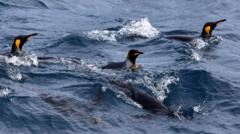
The US Department of Commerce has justified the recent tariffs placed on the Heard and McDonald islands, uninhabited territories home to penguins and seals, as a necessary step to eliminate what they describe as "ridiculous loopholes" in international trade. Howard Lutnick, the US Commerce Secretary, explained that the tariffs are aimed at preventing other nations from routing goods through these islands to reach the US market, as reported in a CBS interview.The announcement caught Australian authorities off guard, particularly Trade Minister Don Farrell, who in a statement to ABC, deemed the tariff imposition as "clearly a mistake" and indicative of a "rushed process." In response to inquiries concerning the rationale for including this Australian territory on the tariffs list, Lutnick stated: "If you leave anything off the list, the countries that try to basically arbitrage America go through those countries to us." He emphasized that the measure is a means to prevent exploitation of such loopholes.Market reactions have been significant, with US stock indices experiencing a substantial decline of over 5% in recent workings, reflecting heightened volatility since 2020. While the inclusion of the remote islands might seem perplexing, Lutnick and other US officials have taken to various platforms to defend this controversial decision, citing a need to curb problematic shipping practices.Historically, global trade often uses transshipment processes, which can obscure the origins and details of shipping transactions. The Pew Charitable Trusts indicated that this method has been exploited, enabling illegal trade of hundreds of millions of dollars in tuna and similar goods annually in the Pacific region.Details regarding the nature of trade between the Heard and McDonald islands and the US are sparse. The World Bank shows that in recent years, exports from these islands to the US have been minimal. Notably, in 2022, the US imported approximately $1.4 million worth of unnamed “machinery and electrical” products from the islands. Also included in Trump's tariff list is the British Indian Ocean territory, which is exclusively occupied by military personnel and requiring special permits for visitation; it recorded an export of $414,350 to the US in the same year.

