
In brief
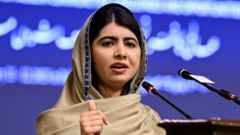
Speaking passionately at a summit focused on girls' education, Malala Yousafzai condemned the Taliban's treatment of women in Afghanistan, labeling it as a form of gender apartheid and urging Muslim leaders to take action against these injustices.
Malala Yousafzai, the renowned advocate for girls' education, has made a compelling appeal to Muslim leaders to challenge the repressive Taliban regime in Afghanistan, which she claims does not recognize women as human beings. During an international summit hosted in Islamabad focusing on girls' education in Muslim communities, she expressed her strong disapproval of the Taliban's discriminatory policies that prevent girls and women from receiving an education and participating in the workforce."Inevitably, the Taliban's actions reflect a stark departure from our sacred beliefs; their policies are un-Islamic," Yousafzai stated. Having survived an assassination attempt at the hands of the Taliban at the age of 15, the 27-year-old advocate's presence at the summit marked a poignant return to her homeland, albeit amidst persistent turmoil regarding women's rights.Yousafzai described the current situation in Afghanistan as a "system of gender apartheid," where women and girls are subjected to physical punishment, detainment, and other forms of violence for disregarding restrictive laws. She criticized the Taliban for cloaking their oppressive actions in religious justification, arguing that this contradicts the true essence of Islam.Despite invitations to attend the summit from the Organization of Islamic Cooperation (OIC), the Taliban leadership chose not to participate. The conference was attended by various scholars and ministers advocating for reform, highlighting that no foreign government has officially recognized the Taliban since their ascent to power in 2021, especially in light of their regressive policies towards women.According to Yousafzai, Afghanistan stands alone in the world as the only nation where girls are barred from secondary and higher education, leaving over one and a half million girls deprived of educational opportunities. She further lamented the broader crisis in various nations impacting girls' education, identifying dire situations in Gaza, Yemen, and Sudan, as she implored the attendees to take a stand against the flagrant violations of educational rights. As the summit unfolded, the call for action against these injustices reverberated, with Yousafzai's message underscoring the urgent need for a global movement to safeguard the future of education for girls in crisis-affected areas.
