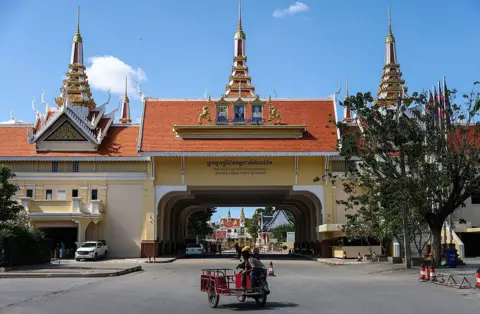
The four expansive wings of the National Museum of Cambodia in Phnom Penh are filled to the brim, forcing visitors to navigate around approximately 1,400 artifacts on display. The century-old museum is nearing its capacity limit, a situation exacerbated by the return of about 300 stolen items from foreign collectors and institutions over the last six years. Recently, oversized statues that resemble refrigerators awaited placement under the museum’s vibrant courtyard roof, still ensconced in protective foam.
Museum director Chhay Visoth identifies the need for more space as his top priority amid these pressing circumstances. Plans for an expansion and renovation are in the works; however, uncertainty surrounds funding sources, fiscal management, and the internal governance of the museum.
A significant consideration is how to exhibit the returned statues in a manner that resonates with Cambodian visitors. For many, these artworks transcended mere aesthetic forms; they symbolize divine entities that house the spirits of ancestors. Huot Samnang, director of Cambodia's antiquities department, notes that visitors congregate in museums not just to observe but to connect with the divine.
The challenge now lies in balancing the logistical needs of a growing collection with the spiritual significance attributed to these artifacts by the Khmer people. As the National Museum navigates its future, it must address these complex demands to truly honor the cultural heritage returning to its home.