In brief
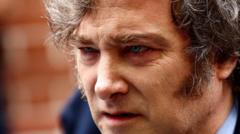
Argentine President Javier Milei has rejected claims of endorsing the cryptocurrency $Libra, which plummeted soon after his social media mention, resulting in significant losses for investors. The president insists on his innocence and maintains that investors were aware of the risks involved, as scrutiny intensifies over potential fraud charges and impeachment threats.
Article: Argentina's President Javier Milei is entangled in controversy as he denies accusations of promoting the ill-fated cryptocurrency $Libra, which suffered a dramatic collapse shortly after his endorsement on social media. The coin's value soared temporarily before falling sharply, leaving many investors at a loss. A judge has been assigned to determine if there are grounds for fraud charges against Milei following the incident.In an interview with Todo Noticias, Milei defended his actions, maintaining that he acted "in good faith." He likened the investors' situation to gambling losses at a casino, questioning the fairness of their complaints given the inherent risks involved. His initial post, which contained a link to purchase $Libra, was removed just hours later after growing backlash from both political opponents and frustrated investors.Critics alleged that the launch of $Libra resembled a "rug pull," where creators draw participants in only to cease operations and keep the funds. Despite the uproar, Milei's office insists he had no role in the coin's creation, and the Anti-Corruption Office is expected to investigate his conduct.Responding to the incident, Milei stated his deletion of the post was due to a lack of understanding about the project at the time. However, opposition leaders threaten to initiate impeachment proceedings, although analysts believe they might lack sufficient votes to pursue such action. The escalating controversy poses a distraction for Milei as he seeks to focus on his ambitious reform agenda. In his televised comments, he expressed confidence, asserting he has "nothing to hide," and emphasized that investors acted voluntarily and assumed possible risks, going so far as to liken it to "playing Russian roulette."