
In brief
A 22-member team from Bangladesh has embarked on a goodwill mission to Beijing, as diplomatic relations with India become increasingly strained.
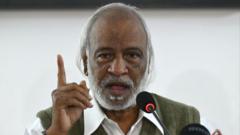
A delegation of 22 members from Bangladesh, consisting of political leaders, civil society representatives, academic scholars, and journalists, has initiated a 10-day trip to China. The visit involves meetings with high-ranking officials from the Chinese government and the Communist Party to discuss improving relations, as confirmed by Abdul Moyeen Khan, the delegation's leader and a senior figure from the Bangladesh Nationalist Party (BNP).This diplomatic move comes in light of escalating tensions between Bangladesh and India over various issues, including the status of former Bangladeshi Prime Minister Sheikh Hasina, who is currently in exile in India. Dhaka has called for her extradition, which New Delhi has thus far denied. Khan characterized this trip as "a goodwill visit, initiated by Beijing," highlighting its uniqueness as it comprises a diverse group representing various Bangladeshi factions.The delegation mainly consists of BNP members and supporters of the student-led movement that contributed to Hasina's ousting last August. Currently, an interim government led by the Nobel laureate Muhammad Yunus oversees the country, with ongoing efforts to secure Hasina's return to face multiple charges, including crimes against humanity. The United Nations has estimated that around 1,400 people lost their lives during protests against Hasina's administration.Historically, Bangladesh maintained amicable relations with India, especially during Hasina's extensive tenure. However, perceptions of her as pro-India have led to a shift. With Hasina's regime fallen, China has increased its diplomatic engagement with various Bangladeshi factions, distancing from Indian influence.This visit follows a significant meeting earlier in the year between the interim government's foreign policy advisor and China's foreign minister, reinforcing a renewed commitment to bolstering ties. As China's involvement escalates, it has emerged as Bangladesh’s largest trading partner, with a trade balance of around $24 billion, chiefly comprised of Chinese exports to Bangladesh.Conversely, India's engagement with the new interim government has been minimal, and tensions remain as Bangladeshi officials accuse New Delhi of meddling in their internal affairs by supporting Hasina. Indian Foreign Minister Subrahmanyam Jaishankar remarked that it is up to Bangladesh to forge its own path regarding relations with India, labeling the criticism from Bangladeshi leaders as “absolutely ridiculous.”As diplomatic rifts widen, the trajectory suggests that Bangladesh may pivot further towards China, paralleling movements seen in Sri Lanka, the Maldives, and Nepal as regional powers compete for influence. Chinese analyst Zhou Bo cautioned that India needs to rethink its expectation of universal influence over South Asia, warning such an attitude could backfire.

