
In brief
The US Space Force Guardians are constantly monitoring potential missile threats, playing a pivotal role in national and allied defense strategies.
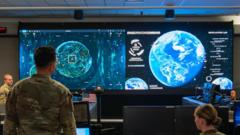
In an exclusive report, the BBC has gained unprecedented access to Buckley Space Force Base in Colorado, which serves as a critical hub for tracking global missile activity. The personnel stationed here, known as "Guardians," work tirelessly around the clock, verifying missile launches from across the globe. At the heart of this operation is a high-tech operations room filled with oversized screens that display crucial data transmitted from a network of military satellites in orbit. During a recent training scenario, Guardians rehearsed responses to missile threats, shouted commands like “Launch Yemen,” followed quickly by coordinated replies of “Copy, launch Yemen.” This drill closely mirrors real-life events; just last month, these operators monitored Iranian missile launches targeted at US interests in Qatar amid rising tensions.Colonel Ann Hughes, a key figure at the base, expressed the heavy atmosphere during the actual missile threat drill, where timely tracking provided vital information to protect US personnel on the ground. She confirmed the Space Force’s strategic importance, stating they provide essential missile warnings to US and allied forces worldwide, which may have included alerts to Ukraine regarding Russian missile attacks.The backdrop of activities at Buckley is immense - an ambitious US missile defense initiative dubbed the Golden Dome, inspired by Israel's Iron Dome, is currently under development. With a proposed budget of $175 billion, this program aims to safeguard against emerging military threats posed by nations like China and Russia, which are advancing their own missile technologies.As tensions rise globally, the Space Force is establishing itself in an arena often overlooked, considering space as the newest battlefield. With projections estimating the number of satellites in orbit could soar from 12,000 to 60,000 by the decade's end, space is increasingly seen as congested and competitive territory.Lt Gen David Miller, leader of the Space Operations Command, emphasizes the need for capabilities to defend US interests in the face of advanced threats like hypersonic missiles. The Space Force has already adapted to the realities of modern warfare, evidenced by their support during the recent Operation Midnight Hammer and by developing offensive space capabilities.As they prepare for potential conflict in space, among their key missions is ensuring dominance through electromagnetic warfare, with specialists on alert 24/7 ready to deploy technology capable of countering enemy communications and providing strategic advantages.In sum, the US Space Force may be relatively new, but it plays a crucial role in preserving American military strength. “When the US military gets focused on something - God help you!” warns Gen Miller, capturing the prevailing sentiment in the evolving landscape of aerial and space defense strategies.
