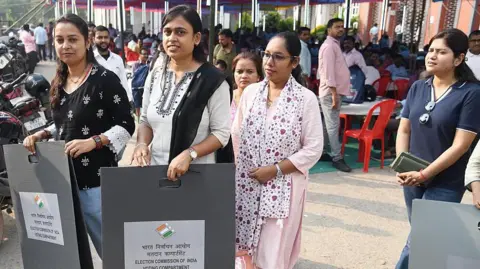
In a significant electoral battle in Delhi, Prime Minister Narendra Modi's Bharatiya Janata Party (BJP) is currently ahead in counting of votes, leading in 41 out of 70 seats, while the Aam Aadmi Party (AAP) is leading in 28 seats, according to the Election Commission of India. With over 60% of the 15 million registered voters turning out to cast their votes, this election is pivotal, especially as the party that secures more than 35 seats can form the government.
Although exit polls had predicted a sweeping victory for the BJP, analysts caution that these forecasts have historically been inaccurate and potentially biased. Winning in Delhi carries symbolic weight, given the city’s stature as the national capital, making it crucial for both competing parties. The AAP has governed from 2013 and is known for its welfare policies but has been mired in corruption allegations, which it vehemently denies.
For the BJP, this election signifies a hopeful resurgence in Delhi after nearly three decades out of power. Recent election wins in neighboring regions have possibly empowered the party's campaign efforts in the capital. In contrast, Congress, the national opposition, faces significant hurdles after governing Delhi between 1998 and 2013 and failing to regain voter confidence since.
The voting process in Delhi involves a unique governance structure where the lieutenant governor plays a vital role in matters concerning law and order, often leading to tensions between state and central governance when opposing parties are elected. Notably, this election centered primarily around welfare issues rather than political identity debates that dominate elsewhere in India, with both AAP and BJP advocating for advancements in healthcare and education.
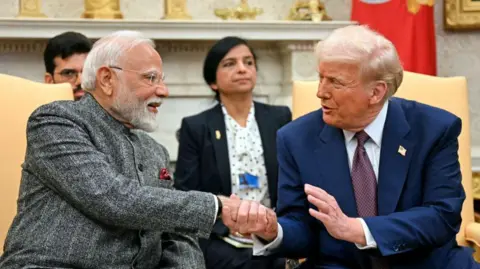
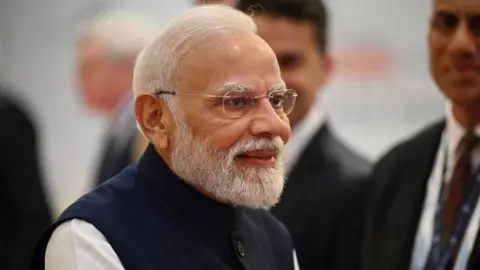
In a strategic bid, the BJP hopes to leverage recent federal budget changes aimed at alleviating tax burdens for middle-class citizens in Delhi, a crucial demographic. Should the BJP secure a win, it may help reinforce Modi's standing among Indian voters after the party's notable loss of an outright majority in recent general elections.
On the other side, the AAP, under the leadership of Arvind Kejriwal, fights to maintain its governing position amidst accusations of malpractice targeting its chief. Kejriwal, who faced legal troubles and allegations linked to corruption, claims that his party is being subjected to political persecution by the BJP.
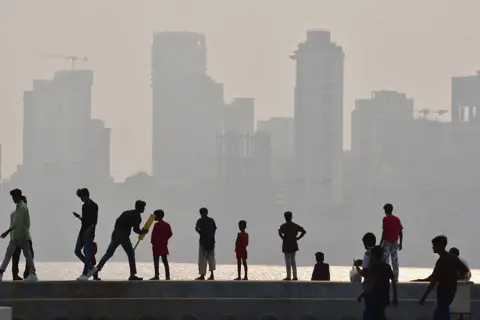
As the election campaign unfolded, significant welfare issues were discussed, yet the ongoing air pollution crisis in Delhi was notably sidelined. The BJP has promised to halve the city's Air Quality Index by 2030, a commitment that remains to be scrutinized by the voters.
With the final results pending, this election not only shapes Delhi's future governance but also serves as a significant reflection of the political climate within India.
Although exit polls had predicted a sweeping victory for the BJP, analysts caution that these forecasts have historically been inaccurate and potentially biased. Winning in Delhi carries symbolic weight, given the city’s stature as the national capital, making it crucial for both competing parties. The AAP has governed from 2013 and is known for its welfare policies but has been mired in corruption allegations, which it vehemently denies.
For the BJP, this election signifies a hopeful resurgence in Delhi after nearly three decades out of power. Recent election wins in neighboring regions have possibly empowered the party's campaign efforts in the capital. In contrast, Congress, the national opposition, faces significant hurdles after governing Delhi between 1998 and 2013 and failing to regain voter confidence since.
The voting process in Delhi involves a unique governance structure where the lieutenant governor plays a vital role in matters concerning law and order, often leading to tensions between state and central governance when opposing parties are elected. Notably, this election centered primarily around welfare issues rather than political identity debates that dominate elsewhere in India, with both AAP and BJP advocating for advancements in healthcare and education.
In a strategic bid, the BJP hopes to leverage recent federal budget changes aimed at alleviating tax burdens for middle-class citizens in Delhi, a crucial demographic. Should the BJP secure a win, it may help reinforce Modi's standing among Indian voters after the party's notable loss of an outright majority in recent general elections.
On the other side, the AAP, under the leadership of Arvind Kejriwal, fights to maintain its governing position amidst accusations of malpractice targeting its chief. Kejriwal, who faced legal troubles and allegations linked to corruption, claims that his party is being subjected to political persecution by the BJP.
As the election campaign unfolded, significant welfare issues were discussed, yet the ongoing air pollution crisis in Delhi was notably sidelined. The BJP has promised to halve the city's Air Quality Index by 2030, a commitment that remains to be scrutinized by the voters.
With the final results pending, this election not only shapes Delhi's future governance but also serves as a significant reflection of the political climate within India.