
In brief
China is investing heavily in artificial intelligence, integrating it into educational tools, consumer technology, and advanced robotics. As domestic firms like DeepSeek rise to prominence, they challenge global competitors and raise concerns over data security and privacy.
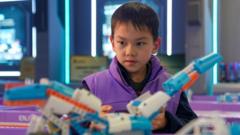
China is witnessing a remarkable surge in artificial intelligence (AI), permeating various aspects of life from educational tools to advanced robotics. In a Beijing apartment, eight-year-old Timmy engages with his AI-powered chess-playing robot, illustrating the personal integration of technology. For Timmy, the robot acts not just as a gaming companion, but as an initial guide into the world of AI, showing the educational potential these innovations hold for the youth.The country is striving to establish itself as a dominant force in technology by 2030. It began with the emergence of DeepSeek, which captivated global attention earlier this year. The financial support for AI enterprises is escalating, with over 4,500 tech companies focused on AI development and education introducing AI subjects into their curriculums. Parents like Timmy's mother, Yan Xue, eagerly embrace these technological advances, believing it's essential for children to learn and adapt alongside AI rather than resist it.Since the Chinese Communist Party labeled AI as a central focus for advancement in 2017, significant investments have flowed into the sector, particularly amid ongoing trade tensions with the United States. The Chinese government aims to allocate 10 trillion yuan (approximately $1.4 trillion) over the next 15 years for AI ventures, hoping to spark innovation despite recent restrictions on technology imports from the U.S. The launch of a 60 billion yuan investment fund for AI signifies the country’s determination to bolster its tech capabilities.The success of DeepSeek has led to an unexpected recognition of homegrown talent, surprising many in Silicon Valley. Entrepreneurs like Tommy Tang, who markets his chess-playing robot, have experienced curiosity and surprise from both domestic and international consumers about China's AI prowess. His company, SenseRobot, has sold over 100,000 units, indicating significant demand for advanced educational tools.One foundation of this success is China's education system; in 2020, the nation produced over 3.5 million graduates in STEM fields, far surpassing any other country. Beijing's focus on nurturing talent ensures a well-equipped workforce ready to engage in AI and technology innovations. Companies like Whalesbot are pioneering interactive toys that help children as young as three grasp programming concepts—a testament to the proactive approach towards tech education.However, as China's AI capabilities expand, concerns regarding data privacy and security loom large. While the domestic market flourishes, skepticism about user data governance persists globally. The Chinese government's access to massive amounts of data raises red flags for Western nations, leading to restrictions on apps like DeepSeek. Companies are mindful of these sensitivities, with pledges to prioritize privacy as a fundamental ethos.Despite facing international skepticism, China's AI industry remains resilient, fueled by innovative approaches and cost-effective production methods. DeepSeek’s fame has spurred excitement among local engineers, highlighting their ambition to seize a significant share of the global AI market. The immediate challenge remains—to maintain the trajectory of innovation and growth amid geopolitical tensions and evolving public perception surrounding privacy and data security.Looking forward, China's goal for technological self-sufficiency remains clear, as officials advance initiatives powered by AI for various societal benefits, including elderly care. With strategic investments and a national commitment to carving out its niche in the tech landscape, China’s journey in AI development is both promising and complex as it continues its race on the global stage.
