
In brief
The initiative faces significant legal and legislative challenges, with critics warning of the potential impacts on education financing and services nationwide.
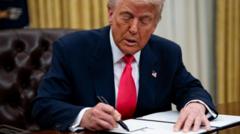
President Donald Trump has formally initiated the process to dismantle the Department of Education through an executive order signed on Thursday, marking a significant step towards fulfilling a long-standing goal of some conservative factions. “We’re going to shut it down as quickly as possible,” Trump declared during the signing ceremony, expressing his belief that the department is ineffective and a financial burden on the country.The President claims that while the U.S. spends more on education than any other nation, student performance remains dismal, ranking near the bottom globally. As stated by the White House, the administration intends to implement cuts within legal bounds, targeting sections of the department that have long been a subject of controversy. However, completely dissolving the department would necessitate Congressional approval, which many analysts deem implausible in the current political climate, particularly as Democrats hold a considerable minority.Trump emphasized the notion of a 'woke' ideological agenda within the department, accusing it of promoting materials related to race and sexual identity that he believes influence young minds negatively. While the agency manages funding, student loans, and specialized programs, the vast majority of education funding derives from state-level contributions, with the federal government contributing approximately 13%.Amid the announcements, Senator Bill Cassidy from Louisiana has indicated plans to propose legislation aimed at formally closing the department, but with a slim Republican majority in the Senate, and procedural hurdles like the requirement for a supermajority, significant legislative change appears unlikely.Linda McMahon, Trump's appointee for the position of Secretary of Education, was applauded at the event, with Trump hinting that her tenure might be coming to an end soon. She previously wrote to department employees expressing a desire to ensure that the agency's “final mission” would ultimately empower American education.Despite the complexity of the situation, experts argue that even if the formal closure of the department doesn’t occur, Trump’s administration could significantly diminish its capabilities and funding, as evidenced by past actions taken against the U.S. Agency for International Development. Critics of the move, including statements from the American Federation of Teachers, warn that dismantling the department could jeopardize educational equity for vulnerable populations.America's educational landscape, largely driven by local governance and state-determined curricula, absorbs most public educational funds from state and local sources, which underscores a critical point made by Trump’s opposition: effective learning cannot be sacrificed in the name of bureaucratic efficiency. As the debate continues, the ramifications of this order will likely unfold amidst rising tensions around educational policy and funding across the nation.



