
In brief
With the German political landscape shifting, the Alternative for Germany (AfD) party is poised to potentially become the second-largest in parliament, signaling a rightward turn in German politics and facing criticism for its stances.
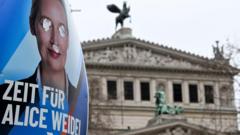
A powerful political movement is on the rise in Germany, with the far-right nationalist Alternative for Germany (AfD) party set to challenge conventional political dynamics. As voters prepare for elections this Sunday, the AfD is polling strongly, possibly ranking as the nation's second-largest party. This development raises alarm among detractors who label the party as "radical," "racist," and "anti-democratic." Germany's domestic intelligence has gone further, suggesting the AfD poses a threat to the constitutional order.The backdrop for this political surge is complex. A wave of populist sentiments has swept across Europe, with the AfD aligning itself with globally known figures like Donald Trump, adopting an "anti-woke," tough stance on migration, and challenging the continued military assistance to Ukraine. Critics, fearing the implications of the AfD's growing power, highlight Germany's historical context, reminding that it is Europe's largest economy and carries substantial weight due to its Nazi past.For the first time since World War II, Germany may witness the successful emergence of a hard-right party, igniting concerns about the nation’s political integrity. Though the AfD's co-leader Alice Weidel may struggle to join a coalition government, the ramifications of its electoral success could reshape the political landscape not only in Germany but across Europe.Current events cast a shadow over Germany's internationally admired economic status, previously secured through innovations in technology and industry. The glorious days of "Vorsprung durch Technik" are overshadowed by the reality of an economy perceived as "broken." Critics argue that Germany is overly reliant on older, energy-heavy industries and has lagged in forward-thinking investments in research and technology.The repercussions of a sluggish economy and reliance on foreign energy sources have been exacerbated by events like Russia's invasion of Ukraine, which forced Germany to seek alternative energy supplies, straining local businesses. Additionally, Germany’s military capabilities have come under scrutiny, with NATO allies pushing for greater military investment. While many Germans support continued aid to Ukraine, the AfD advocates for a retreat from military engagements.Germany’s infrastructure is another pressing issue, with reports noting that over 4,000 bridges remain in disrepair, a reflection of long-standing underinvestment. The ongoing challenges are compounded by restrictions on government spending enshrined in the constitution, leaving Germany with less flexibility to adapt to modernizing needs.With migration shaping a significant societal discourse, the AfD has leveraged rising concerns over border security, responding to public fears while facing accusations of racism. Although the majority of the German populace holds anti-AfD views, the party's rhetoric has prompted mainstream political parties to adopt more hardline stances on immigration.As the election approaches, the traditional bipartisan agreements aimed at preventing extremist groups from gaining footholds may be tested. The political establishment may struggle to contain the AfD's growing appeal, marked by public sentiment and changing demographics among voters. Despite the party's rising support, it remains unlikely to claim a place in the governing coalition, thanks to Germany's structured political system designed to deter authoritarian dominance.As the country prepares for what could be a watershed election, the AfD maintains that it represents a legitimate, conservative voice, challenging the idea that it is solely a far-right entity. The potential upheaval promises to reshape Germany's political discourse, as voices come forth advocating for a return to values they believe are essential to the nation’s future. The stakes are high, and not only for Germany but for Europe as a whole.
