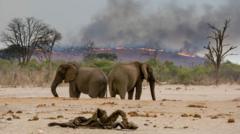
The report elucidates various solutions and highlights the considerable costs of neglecting these interconnections.
The interconnectedness of environmental challenges such as climate change, biodiversity loss, and food insecurity has been thrown into sharp relief by a recent comprehensive review by the Intergovernmental Platform on Biodiversity and Ecosystem Services (IPBES). The report, which garnered approval from nearly 150 countries at a conference in Windhoek, Namibia, critiques the prevalent "siloed" approach in governance, noting that this separation leads to unintended consequences like biodiversity damage from mismanaged tree plantations and pollution from agricultural expansion.
Co-chair Paula Harrison, a professor at the UK Centre for Ecology & Hydrology, emphasized the importance of recognizing the interdependencies among biodiversity, water resources, food systems, health, and climate change. Current governance structures often promote fragmented efforts that overlook these connections. For instance, addressing diseases like bilharzia through health measures alone fails to consider its environmental drivers. In Senegal, an innovative approach that tackled water pollution and invasive plants also resulted in health and biodiversity improvements.
The report's co-chair, Prof Pamela McElwee from Rutgers University, pointed out that contemporary decision-making frequently prioritizes short-term economic gains without accounting for their environmental repercussions. It is estimated that failing to consider these costs results in a staggering loss of $10-25 trillion per year related to biodiversity, water, health, and climate effects stemming from food production.
Highlighting dire environmental conditions, the IPBES report indicates that over half the global population, particularly in developing nations, is affected by biodiversity decline, compromised water quality, and food insecurity. Moreover, the ongoing decline of biodiversity - driven primarily by human activities - directly threatens nutrition, water availability, health, and resilience against climate impacts.
Delaying necessary action, the report warns, could double future costs and heighten the risk of species extinction. It argues that a singular focus on climate change can negatively influence biodiversity and food security due to land-use competition. Conversely, the report presents hopeful scenarios that demonstrate potential positive outcomes through sustainable production, ecosystem conservation, pollution reduction, and climate mitigation strategies.
The IPBES functions akin to the IPCC for biodiversity, delivering scientific assessments that inform policymakers on the vital contributions of ecosystems to human life. Previous IPBES findings have underscored the insufficient valuation of nature by policymakers, and a significant report from 2019 warned that human activity could push a million species toward extinction.
For continued insights and updates on climate and environmental issues, sign up for relevant newsletters providing a global perspective.
The interconnectedness of environmental challenges such as climate change, biodiversity loss, and food insecurity has been thrown into sharp relief by a recent comprehensive review by the Intergovernmental Platform on Biodiversity and Ecosystem Services (IPBES). The report, which garnered approval from nearly 150 countries at a conference in Windhoek, Namibia, critiques the prevalent "siloed" approach in governance, noting that this separation leads to unintended consequences like biodiversity damage from mismanaged tree plantations and pollution from agricultural expansion.
Co-chair Paula Harrison, a professor at the UK Centre for Ecology & Hydrology, emphasized the importance of recognizing the interdependencies among biodiversity, water resources, food systems, health, and climate change. Current governance structures often promote fragmented efforts that overlook these connections. For instance, addressing diseases like bilharzia through health measures alone fails to consider its environmental drivers. In Senegal, an innovative approach that tackled water pollution and invasive plants also resulted in health and biodiversity improvements.
The report's co-chair, Prof Pamela McElwee from Rutgers University, pointed out that contemporary decision-making frequently prioritizes short-term economic gains without accounting for their environmental repercussions. It is estimated that failing to consider these costs results in a staggering loss of $10-25 trillion per year related to biodiversity, water, health, and climate effects stemming from food production.
Highlighting dire environmental conditions, the IPBES report indicates that over half the global population, particularly in developing nations, is affected by biodiversity decline, compromised water quality, and food insecurity. Moreover, the ongoing decline of biodiversity - driven primarily by human activities - directly threatens nutrition, water availability, health, and resilience against climate impacts.
Delaying necessary action, the report warns, could double future costs and heighten the risk of species extinction. It argues that a singular focus on climate change can negatively influence biodiversity and food security due to land-use competition. Conversely, the report presents hopeful scenarios that demonstrate potential positive outcomes through sustainable production, ecosystem conservation, pollution reduction, and climate mitigation strategies.
The IPBES functions akin to the IPCC for biodiversity, delivering scientific assessments that inform policymakers on the vital contributions of ecosystems to human life. Previous IPBES findings have underscored the insufficient valuation of nature by policymakers, and a significant report from 2019 warned that human activity could push a million species toward extinction.
For continued insights and updates on climate and environmental issues, sign up for relevant newsletters providing a global perspective.