
In brief
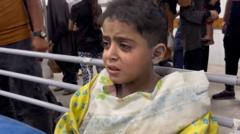
In the heart of war-torn Gaza, individuals like Hatem Al-Atar dedicate themselves to aiding their community while grappling with profound personal grief. As they navigate a landscape of destruction, their stories reflect both the immediate need for aid and the deeper psychological scars left by the conflict. Young survivors, such as ten-year-old Amr al Hindi, embody the hope of a future rebuilt from the remnants of tragedy.
In the midst of the chaos that has engulfed Gaza since the onset of the war, individuals like 25-year-old Hatem Al-Atar stand as pillars of resilience. Hatem, who has not married, finds purpose in the rubble that surrounds him, deeply connected to the destruction that has claimed the lives of neighbors and loved ones. "Every second in this war was hard. You could lose your life, or a beloved one any second," he reflects as he sits with fellow civil defense volunteers in Deir al-Balah. It is not recklessness that drives him, but a profound sense of duty amid profound personal loss; 94 of his comrades have been killed just in the recent months.His own brush with death came unexpectedly as he responded to the aftermath of a missile strike near Nasser hospital. Having rushed into a house to search for survivors, he barely escaped a second explosion, pulled to safety by friends as the world around him erupted in chaos. Hatem continues to work, driven by his desire to live out the dreams of his family—including those of his father and brother, who were taken from him by the violence. He envisions a future beyond the ruins, hoping to pursue his education and perhaps marry once the clouds of war lift.In the hours that followed the announcement of a ceasefire, scenes in Gaza shifted from horror to cautious optimism. Local journalists captured the re-emergence of fighters, celebratory gunfire, and crowds gathering in the streets—an indication of a longing for normalcy amidst widespread devastation. As families began to return to their neighborhoods, the extent of damage became painfully evident. Survivors like Professor Jumaa Abu Shiha faced the grim reality of what was once home, filled with memories now reduced to rubble and despair.He recounts building his home with care, only to return to a fragmented shell of what it once was. "The feeling is indescribable," he shares, as he surveys the remains of his family's sanctuary. The challenges ahead are vast, compounded by the urgent need for aid that has faced obstacles due to the on-ground realities of conflict.Concurrently, families bearing the emotional scars of war find themselves in need not just of physical resources but also psychological support. Reports highlight the trauma children like ten-year-old Amr al Hindi have endured. The sole survivor of a devastating airstrike that claimed his entire family, Amr's spirit shines through even in the darkest shadows of loss. With dreams of becoming a doctor like his late brother, he carries the weight of expectation and heartbreak.As the sound of aid trucks fills the air and food reaches those who have been displaced, there remains another war for the people of Gaza to confront—the war within. The collective trauma will linger, underscoring their struggle for hope and resilience as they reckon with the memories of what once was and embrace the possibility of a future yet to be written.

