
In brief
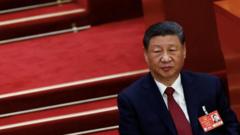
As President Xi Jinping's administration grapples with mounting tariffs imposed by President Donald Trump, China has made clear it is prepared for any conflict—be it economic or military.
China has issued a stark warning to the United States, asserting its readiness to engage in "any type" of war following President Donald Trump's recent escalation of trade tariffs. The ongoing clash between the two economic powerhouses is shifting closer to a full-blown trade war, as the US has announced additional tariffs on all Chinese imports, prompting China to retaliate with tariffs ranging from 10-15% on American agricultural products. In a post shared by the Chinese embassy in Washington on the social media platform X, the message was clear: "If war is what the US wants—be it a tariff war, a trade war, or any other type of war— we're ready to fight till the end." This assertive language marks one of the strongest statements from China in recent years and comes as political leaders convene in Beijing to kick off the annual National People's Congress.During this session, Chinese Premier Li Qiang disclosed plans to raise defense spending by 7.2%, underlining the urgency of adapting to "changes unseen in a century" occurring across the globe. While this increase aligns with last year's announced figures, it is part of a broader strategy to reassure domestic audiences that the Chinese economy remains robust despite looming trade threats.Beijing is eager to cultivate an image of a stable and peaceful nation, particularly in contrast to the US, which it criticizes for military engagements in the Middle East and Ukraine. Moreover, China seeks to leverage the fallout from US tariffs affecting allies like Canada and Mexico without alienating potential partners globally.In previous statements, President Xi has expressed the need for military readiness, especially in the context of Taiwan, but there is a delicate balance between military preparedness and aggressive posturing. The Deputy Director of the Chinese Foreign Ministry recently condemned US accusations regarding fentanyl trafficking as an unjustified pretext for higher tariffs, stating that intimidation and threats are not effective against China.As tensions escalate, both economic and strategic relations between the two countries remain fraught with contention. China's official post has garnered significant attention on social media, potentially emboldening those in Trump's cabinet who view Beijing as the foremost foreign threat.Although both nations once fostered hopes for a more amiable relationship—marked by an invitation to Trump’s inauguration—the outlook has cooled significantly. Xi is currently facing domestic economic challenges, including low consumption, a real estate slump, and rising unemployment. Amid the turmoil, China has committed to investing billions into revitalizing its economy as it aims for a growth target of 5% amid ongoing trade disputes. With a military budget of $245 billion—second only to the US—China's defense expenditures represent a smaller percentage of GDP compared to its American counterpart. However, experts suggest that China's defense spending may be understated, reflecting a complex geopolitical landscape ahead.
