
In brief
The ambitious project will create the world’s longest road and rail tunnel, enhancing connectivity and boosting the local economy
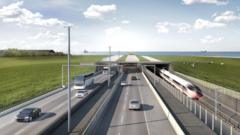
The Fehmarnbelt tunnel, an unprecedented engineering project under the Baltic Sea, is currently under construction to link Denmark and Germany. Stretching over 18 kilometers (11 miles), this tunnel aims to drastically reduce travel times between Hamburg and Copenhagen. Designed to be the world’s longest pre-fabricated tunnel for both road and rail, the Fehmarnbelt represents an innovative leap in transportation infrastructure.Situated near Lolland, Denmark, the main construction site encompasses more than 500 hectares and includes a harbor and a manufacturing facility. Here, the tunnel elements, each measuring 217 meters (712 feet) long and 42 meters wide, are constructed from reinforced steel and concrete. Unlike traditional underwater tunnels that dig through bedrock, this project will assemble 90 massive prefabricated sections, akin to Lego pieces, on the seabed.Henrik Vincentsen, CEO of Femern, the state-owned company overseeing the construction, noted, "We are breaking records with this project." The facility is expected to cost around €7.4 billion ($8.1 billion), primarily funded by Denmark and supplemented by €1.3 billion from the European Commission. It's one of the largest infrastructure undertakings in the region, aiming to strengthen travel connections across Europe and promote sustainable transportation options.Once complete, the Fehmarnbelt tunnel will reduce the journey between Rødbyhavn in Denmark and Puttgarten in Germany to just 10 minutes by car, or seven minutes by train. This new route will cut travel time between Copenhagen and Hamburg in half, a significant improvement over the current 45-minute ferry ride. Moreover, this new trajectory for freight and passengers promises lower carbon emissions by minimizing travel distances.As construction advances, efforts are made to mitigate environmental concerns. A federal court in Germany recently dismissed challenges from groups worried about the impact on local wildlife. To counterbalance ecological disruptions, plans include a wetland nature and recreational area created from dredged materials.Expected to open in 2029, the tunnel is projected to serve over 100 trains and 12,000 cars daily. Revenue from tolls will help finance construction costs recoverable over around 40 years. Locals eagerly anticipate the economic boost from the project, especially in Lolland, one of Denmark's most economically challenged areas. "The locals down here have been waiting for this project for many years," said Anders Gert Wede, senior construction manager, reflecting the optimism surrounding this major infrastructure investment.


