
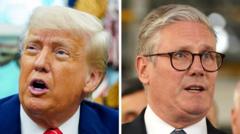
In brief
In a recent agreement between the US and UK, import taxes on select British cars are reduced, and tariffs on steel and aluminium will be lifted, promising some economic relief to key UK sectors. However, many analysts argue that the long-term implications remain unclear, as the core tariffs introduced by Trump still impose significant burdens.
The United States and the United Kingdom have come together to outline a transformative trade agreement, which sees a reduction in tariffs on selected British cars and the suspension of duties on certain steel and aluminium imports. This new arrangement aims to relieve pressure on British industries significantly affected by tariffs imposed by President Donald Trump since his return to office in January.While leaders from both countries praised the announcement, which was made without a formal signing ceremony and lacked extensive detail, it appears that a 10% import duty will still remain in effect on a majority of other UK products. Analysts suggest that this agreement, while notable, might not drastically change the trade dynamics established prior to Trump's tariff changes.Sir Keir Starmer, speaking from a Jaguar Land Rover plant in the West Midlands, celebrated the deal as a "fantastic platform" for British businesses, asserting that it would safeguard numerous jobs in critical sectors like car manufacturing and steel production. At the White House, Trump characterized the agreement as a “great deal” and expressed his intent to enhance it further over time.The specifics of the tariff adjustments include a reduction of the 25% tax on cars to 10% for up to 100,000 vehicles per year, providing a much-needed boost for luxury manufacturers such as Jaguar Land Rover and Rolls Royce. However, this quota closely mirrors the exports from the UK in the previous year, potentially capping future growth in this area. Business Secretary Jonathan Reynolds indicated that failing to negotiate this arrangement could have led to significant job losses.In an additional move, tariffs on steel and aluminium, previously increased to 25% by Trump, will now be reduced as quotas will be reestablished. Both nations will also permit the exchange of up to 13,000 metric tonnes of beef, which previously faced steep duties. The changes are projected to create about $5 billion (£3.8 billion) in trade opportunities, according to US officials.UK Steel director General Gareth Stace welcomed the developments, hinting that this deal brings crucial relief to the steel sector. However, some business representatives voiced concerns, suggesting the current agreement does not measure up to prior arrangements and advocating for more detailed scrutiny from parliament.Conservative Party leader Kemi Badenoch criticized the deal, asserting it represents a concession by the UK without sufficient reciprocal benefits, while the Liberal Democrats called for parliamentary voting rights on the arrangement. Sir Ed Davey emphasized that the effectiveness of any trade deal, particularly with Trump, lies in precise details. Despite these mixed reactions from politicians, Nigel Farage of Reform UK described the accord as a "step in the right direction," acknowledging it as a potential "Brexit benefit."Both nations have been in talks regarding a trade deal since Trump's previous term, with earlier discussions failing to yield an agreement. The implications for US healthcare products and the broader effects of fluctuating tariffs remain to be seen, with business leaders awaiting further clarity from regulators and trade negotiators.

