
In brief
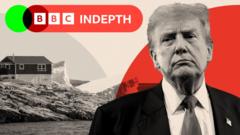
As Greenland grapples with its colonial past and modern identity, recent discussions around independence and potential US acquisition unveil a complicated web of desires among its inhabitants. With sentiments running high, the island faces critical questions regarding its autonomy, social welfare, and economic independence.
On a hill overlooking Nuuk's cathedral stands a towering statue of Hans Egede, a Protestant missionary who revived ties between Greenland and Northern Europe in the 18th century, laying the foundation for Denmark’s colonization. However, a striking act of defiance occurred in the late 1970s when the statue was splashed with red paint, a powerful reminder that not all Greenlanders celebrate the legacy left behind.During my time growing up in Greenland — where my father taught at a teacher training college — it was clear that not everyone was pleased with the changes ushered in by Egede. Despite the modern conveniences and improved education Denmark provided, many Inuit faced struggles like alcoholism, which left an undeniable mark on the community. The dream of full autonomy from Denmark, however, had a much slower trajectory.Greenland, home to approximately 57,000 people, has seen increasing discussions about its autonomy since gaining home rule in 1979. Recent comments from former US President Donald Trump about military and economic interest in the territory have reignited divisive dialogues. Trump suggested that Americans might view Greenland's resources as essential for security, while Danish Prime Minister Mette Frederiksen firmly contends that the island "belongs to the Greenlanders," emphasizing that its future should be self-defined.A recent poll indicated only a small fraction of Greenlanders desires annexation by the US, while the majority — around two-thirds — advocate for independence from Denmark. However, this complicated mindset stems from historical grievances and ongoing revelations of systemic injustices perpetrated against the Inuit population, including allegations of forced sterilizations from the late 1960s into the 1970s.Greenland's Prime Minister, Múte Egede, has denounced these past acts by Denmark as "straightforward genocide." These sentiments have fostered a growing desire for independence among many Greenlanders, a movement represented by various voices in the community. While the idea of independence gains traction, underlying economic concerns loom large, especially considering the substantial financial support Greenland receives from Denmark, which exceeds £480 million per year.Many Greenlanders fear that losing this subsidy could threaten their welfare system, a fear underscored by ongoing debates around potential partnerships with both the US and Denmark for sustainable development and resource extraction. There is also concern over healthcare access since current arrangements allow Greenlanders treatment in Danish hospitals. Debate rages over what independence would even mean for the territory. Voices calling for a "free association" with the US — similar to arrangements with other Pacific nations — have emerged. In this scenario, freedom and sovereignty are anticipated while retaining robust connections with both the US and Denmark.The conversation surrounding Greenland’s future has amplified calls for broader cooperation with countries like Canada and Iceland, leading some to question Greenland's abilities to sustain welfare benefits independently. The complexities of these new discussions symbolize a critical juncture for Greenland, one that evokes a sense of urgency among its residents.With sentiment within the island fluctuating, the quest for a clearer path toward not just independence but a true expression of self-determination remains. For Greenland, the balance between seeking international solidarity and preserving its rich cultural identity will be pivotal in the evolving saga of this Northern territory. As Greenland continues to navigate its past while contemplating its future, the reality remains that its identity, autonomy, and connection to the world depend heavily on its people's voice and choice.



