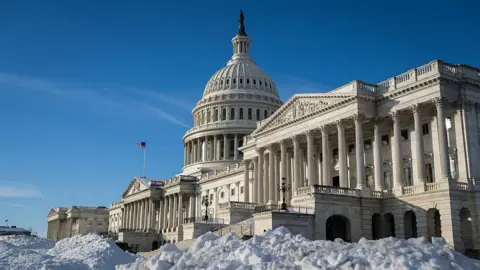
WASHINGTON (AP) — Senate leaders are desperate to save a bipartisan spending deal, striving to prevent a government shutdown as Democrats push for stricter measures against federal immigration raids nationwide.
On Thursday, a rare agreement was struck between Democrats and President Trump to decouple funding for the Homeland Security Department from a wider government spending bill. This interim funding arrangement lasts for two weeks while Congress examines proposals to impose restrictions on the U.S. Immigration and Customs Enforcement agency (ICE). The negotiations come in response to the shocking deaths of two protesters allegedly at the hands of federal agents in Minneapolis, igniting outrage among Democrats who threatened to reject any spending bill without concessions.
“Both parties have come together to fund the majority of the government until September, while temporarily extending funding for Homeland Security,” Trump announced via social media, encouraging a united bipartisan vote.
Despite the urgency, the agreement faced delays late Thursday. Senate leaders continued to navigate objections from their respective parties as they aimed to secure enough votes before the imminent deadline.
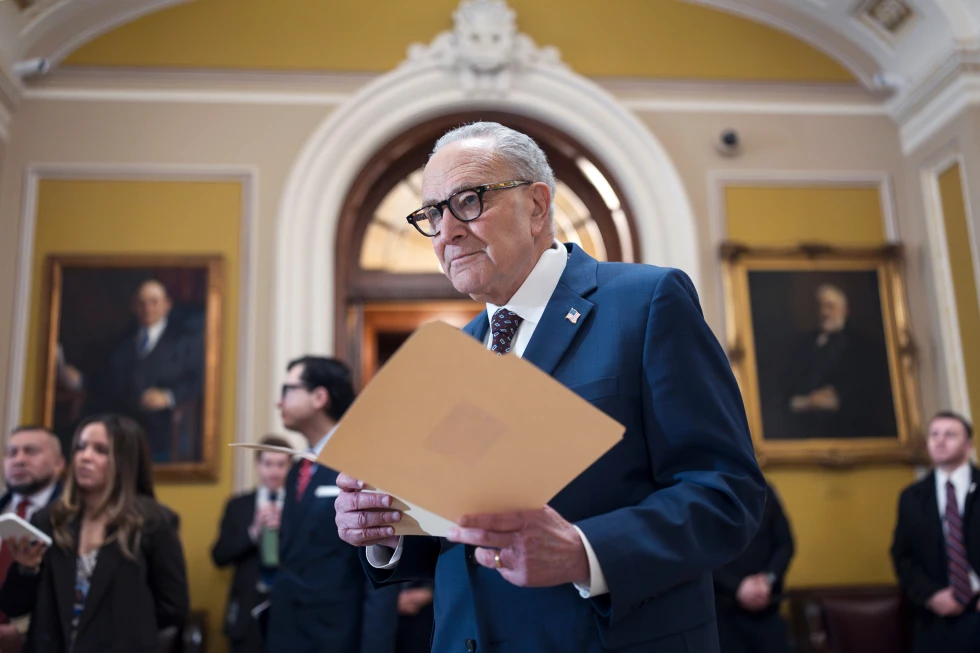
During negotiations, Senate Majority Leader John Thune remarked on the difficulties in finding common ground, while Senate Minority Leader Chuck Schumer emphasized the critical nature of these discussions amid public outcry.
The tragic recent shootings have heightened scrutiny on ICE operations, prompting calls for a full investigation and legislative reforms. Schumer stated, ICE's actions constitute state-sanctioned thuggery that must cease; Congress has both the authority and moral responsibility to intervene.”
As Democrats outline their demands—including an end to ‘roving patrols’ and the need for accountability measures through body cameras—Republicans have voiced mixed reactions to the proposals. With both parties still divided, the prospect of a government closure looms closer as internal party divisions persist.
With House Speaker Mike Johnson asserting a firm stance against breaking up the overarching funding package, the next steps remain uncertain. The risk of a shutdown, which previously led to a prolonged government closure, hangs in the balance as the Senate prepares for continued negotiations on Friday.