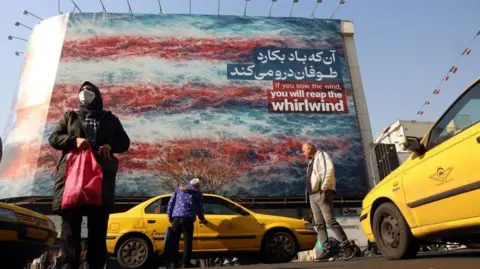
Amid the din of global speculation over US military build-up in the Middle East, Israel's leaders have remained unusually silent. Aside from some remarks in support of Iran's anti-government protests this month, Israel's prime minister has had little to say publicly about his superpower ally taking on his biggest enemy. His government has remained equally silent. 'It shows you the importance Netanyahu puts on this moment,' said Danny Citrinowicz, a senior Iran researcher at Israel's Institute for National Security Studies. With a military build-up in the Gulf, Netanyahu sees an opportunity that he cannot afford to miss.
Former Israeli officials suggest that strategy lies in Israel's silence; they believe that by allowing the Americans to lead, Israel can benefit from the US's stronger capabilities and legitimacy. Netanyahu has long considered Iran to be a substantial threat, yet his quiet approach does not indicate a lack of private consultations with the US on potential strikes against Iran. Recently, Israel's military intelligence chief met US agencies to discuss possible Iranian targets, reflecting a careful balancing act.
As US President Trump weighs military options against Iran, views among Israeli lawmakers diverge; some advocate for aggressive military action, while others caution that limited strikes might bring more peril than benefit. Polls indicate a majority of Israelis support military action, highlighting a widespread anxiety concerning Iran's missile capabilities and nuclear ambitions.
Experts warn the consequences of a regime change may be an uncertain venture; without a clear successor in Iran, chaos could erupt, destabilizing the region. For Netanyahu, the stakes couldn't be higher as he navigates a politically charged atmosphere, eager to enhance his security credentials at home. As he maneuvers through these delicate military intricacies, Israelis express both hope and concern regarding the potential for another conflict, fearing the devastating losses witnessed in past encounters. 'This is an opportunity that may not come again,' an Israeli analyst stated, emphasizing the urgency of addressing Iran as tensions rise.
Former Israeli officials suggest that strategy lies in Israel's silence; they believe that by allowing the Americans to lead, Israel can benefit from the US's stronger capabilities and legitimacy. Netanyahu has long considered Iran to be a substantial threat, yet his quiet approach does not indicate a lack of private consultations with the US on potential strikes against Iran. Recently, Israel's military intelligence chief met US agencies to discuss possible Iranian targets, reflecting a careful balancing act.
As US President Trump weighs military options against Iran, views among Israeli lawmakers diverge; some advocate for aggressive military action, while others caution that limited strikes might bring more peril than benefit. Polls indicate a majority of Israelis support military action, highlighting a widespread anxiety concerning Iran's missile capabilities and nuclear ambitions.
Experts warn the consequences of a regime change may be an uncertain venture; without a clear successor in Iran, chaos could erupt, destabilizing the region. For Netanyahu, the stakes couldn't be higher as he navigates a politically charged atmosphere, eager to enhance his security credentials at home. As he maneuvers through these delicate military intricacies, Israelis express both hope and concern regarding the potential for another conflict, fearing the devastating losses witnessed in past encounters. 'This is an opportunity that may not come again,' an Israeli analyst stated, emphasizing the urgency of addressing Iran as tensions rise.