France's National Assembly has taken a first step towards banning social media access for under-15s, a proposal backed by President Emmanuel Macron.
Lawmakers in the lower house on Monday agreed key elements of the bill, and are now expected to vote on the full text. The bill still needs to be approved by the upper house, the Senate.
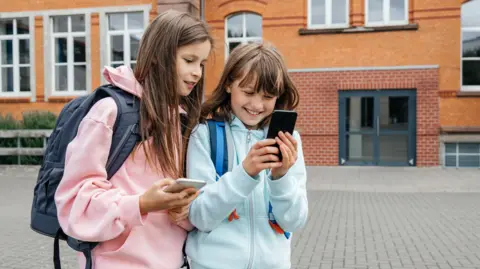
If the legislation is passed, young teenagers would not be able to use networks such as Snapchat, Instagram and TikTok.
The French move is part of a worldwide trend towards restricting social networks for children, triggered by growing evidence of the damage they can cause to mental health. A similar law was passed in Australia late last year.
With this law we will set down a clear limit in society, said Laure Miller, a lawmaker behind the bill, as quoted by Le Monde. We are saying something very simple: social networks are not harmless, she added.
Macron has said he wants the ban in place by the start of the school year in September, emphasizing the importance of protecting children from the profit-driven motives of social media companies.
The plan includes the establishment of a list of deemed harmful social media networks that would be simply banned for under 15s, while a separate list of less harmful sites would be available only with explicit parental permission.
If the law is enacted, France will also need to work on age-verification mechanisms similar to existing measures for adult content online.
Other European nations like Denmark, Greece, and Ireland are considering similar restrictions following the Australian model, reflecting a rising concern over the psychological impact of social media on younger populations.
Lawmakers in the lower house on Monday agreed key elements of the bill, and are now expected to vote on the full text. The bill still needs to be approved by the upper house, the Senate.
If the legislation is passed, young teenagers would not be able to use networks such as Snapchat, Instagram and TikTok.
The French move is part of a worldwide trend towards restricting social networks for children, triggered by growing evidence of the damage they can cause to mental health. A similar law was passed in Australia late last year.
With this law we will set down a clear limit in society, said Laure Miller, a lawmaker behind the bill, as quoted by Le Monde. We are saying something very simple: social networks are not harmless, she added.
Macron has said he wants the ban in place by the start of the school year in September, emphasizing the importance of protecting children from the profit-driven motives of social media companies.
The plan includes the establishment of a list of deemed harmful social media networks that would be simply banned for under 15s, while a separate list of less harmful sites would be available only with explicit parental permission.
If the law is enacted, France will also need to work on age-verification mechanisms similar to existing measures for adult content online.
Other European nations like Denmark, Greece, and Ireland are considering similar restrictions following the Australian model, reflecting a rising concern over the psychological impact of social media on younger populations.