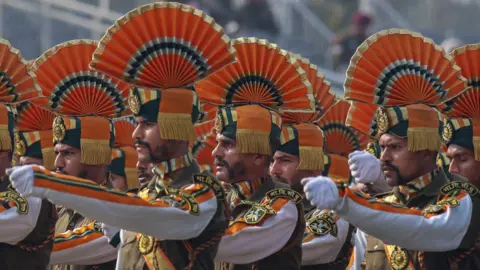
India will mark its 77th Republic Day on 26 January - the day when the country adopted its constitution and formally became a republic, breaking from its colonial past.
The annual grand parade will take place along Delhi's iconic central boulevard, with military tanks rolling past and fighter jets roaring overhead as thousands watch. This year, European Commission President Ursula von der Leyen and European Council President António Costa will serve as chief guests, underlining India's renewed focus on its relationships with the European Union.
Occupying prominent positions at such ceremonial events has historically been more than mere protocol but a clear indicator of India's foreign policy priorities. The practice dates back to 1950, starting with the then Indonesian president, reflecting India's commitment to new alliances and partnerships with emerging nations.
In recent years, the selection of chief guests has mirrored shifts in global dynamics; invitations have swung from regional neighbours to major global powers. This year's guests symbolize India's deepening engagement with the EU amid ongoing discussions about trade agreements and strategic alignments.
India's Republic Day parade distinguishes itself from other military displays worldwide, not merely celebrating military might but also emphasizing its constitutional democracy. The event serves as a grand canvas showcasing India's cultural diversity alongside its military capabilities, fostering a sense of unity among the nation’s myriad communities.
Through choices of guest leaders, India signals its diplomatic aspirations and strategic objectives, reinforcing alliances or marking pivotal turning points in international relations.