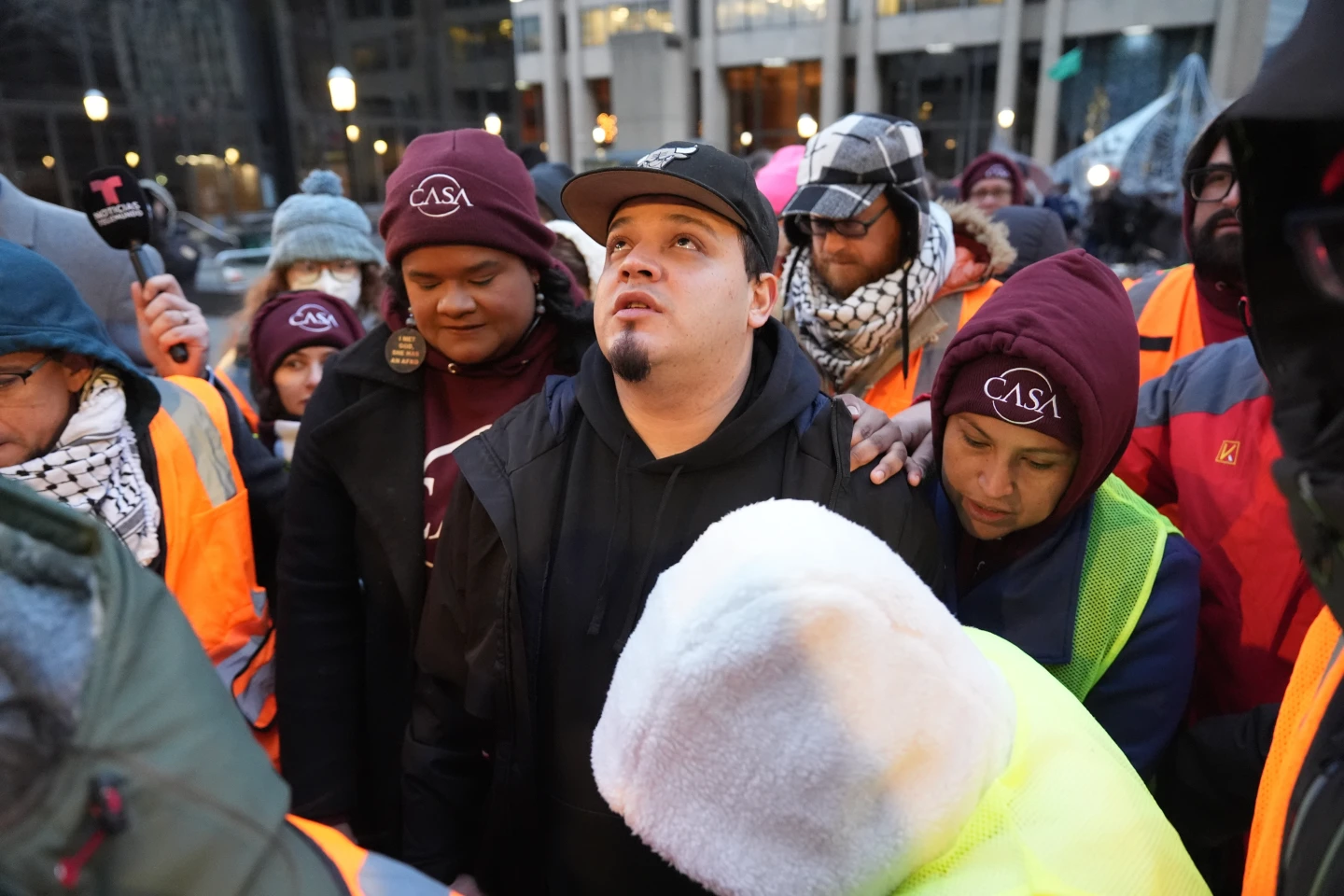
BALTIMORE (AP) — Kilmar Abrego Garcia, whose mistaken deportation played a role in mobilizing opposition to President Donald Trump’s immigration policies, found his way back to freedom as a judge intervened to block efforts to detain him again on Thursday.
After being previously deported to El Salvador, he was released from immigration detention following a legal battle that has captivated attention nationwide. A 2019 ruling had marked Garcia as a subject of potential danger if sent back to El Salvador. Nevertheless, the Trump administration attempted to send him to various countries, including Uganda and Liberia, igniting legal scrutiny.
Abrego Garcia, a Salvadoran native with an American family, had entered the United States illegally as a teenager and had been living under the supervision of immigration authorities, despite being granted protection against deportation three years ago. He was mistakenly sent back to El Salvador earlier this year, detained in a harsh prison, and only returned to the U.S. following a U.S. Supreme Court decision. Upon arrival, he was slapped with a human smuggling charge, although he maintains his innocence.
A federal judge ruled that a vital procedural error was made in Garcia's earlier immigration hearings, which may render future deportation attempts impossible unless a new order is issued. This decision not only grants him temporary reprieve but also raises questions about the integrity of the immigration process under the Trump administration.
As he embraces his current freedom, he must report back to immigration officials shortly, with his attorneys wary of potential detention. Meanwhile, in Tennessee, his alienation from family due to ongoing legal issues continues as he pleads not guilty to human smuggling charges, claiming vindictive prosecution stemming from his previous immigration case.
Legal experts indicate that the future of his case remains uncertain, as the government may pursue appeals against the recent ruling, igniting further debates on immigration justice in the United States.
After being previously deported to El Salvador, he was released from immigration detention following a legal battle that has captivated attention nationwide. A 2019 ruling had marked Garcia as a subject of potential danger if sent back to El Salvador. Nevertheless, the Trump administration attempted to send him to various countries, including Uganda and Liberia, igniting legal scrutiny.
Abrego Garcia, a Salvadoran native with an American family, had entered the United States illegally as a teenager and had been living under the supervision of immigration authorities, despite being granted protection against deportation three years ago. He was mistakenly sent back to El Salvador earlier this year, detained in a harsh prison, and only returned to the U.S. following a U.S. Supreme Court decision. Upon arrival, he was slapped with a human smuggling charge, although he maintains his innocence.
A federal judge ruled that a vital procedural error was made in Garcia's earlier immigration hearings, which may render future deportation attempts impossible unless a new order is issued. This decision not only grants him temporary reprieve but also raises questions about the integrity of the immigration process under the Trump administration.
As he embraces his current freedom, he must report back to immigration officials shortly, with his attorneys wary of potential detention. Meanwhile, in Tennessee, his alienation from family due to ongoing legal issues continues as he pleads not guilty to human smuggling charges, claiming vindictive prosecution stemming from his previous immigration case.
Legal experts indicate that the future of his case remains uncertain, as the government may pursue appeals against the recent ruling, igniting further debates on immigration justice in the United States.