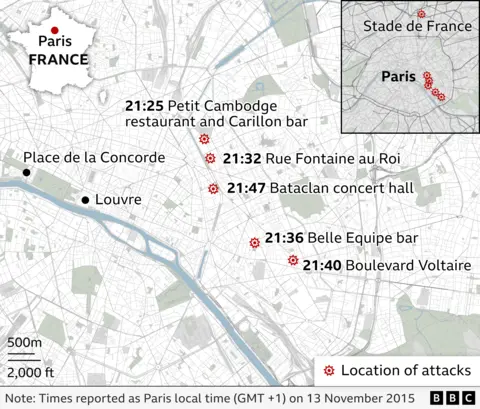
Just as France marks the 10th anniversary of the Bataclan massacres, another reminder has come of the permanence of the jihadist threat. A former girlfriend of the only jihadist to survive the November 2015 attacks has been arrested on suspicion of plotting her own violent act.
The woman - a 27-year-old French convert to Islam named as Maëva B - began a letter-writing relationship with Salah Abdeslam, 36, who is serving a life sentence in jail near the Belgian border following his conviction in 2022.
When prison guards discovered that Abdeslam had been using a USB key containing jihadist propaganda, they traced its origin to face-to-face meetings that the prisoner had with Maëva B. Detectives then looked into Maëva B's own computer and telephone, where they found evidence she may have been planning a jihadist attack, and on Monday she was placed under judicial investigation along with two alleged associates.
With France commemorating 10 years since the worst attack in its modern history, the arrest has focused minds on the enemy that never went away.
Overall, 130 people were killed during the attacks, 90 in the Bataclan itself, and over 400 treated in hospitals. The impact of these events extends beyond physical injuries; countless others suffer from psychological trauma. Since then, the word 'Bataclan' has become synonymous with the threat of extremist Islamist violence in France, similar to how '9/11' represents such violence in the US.
Despite the reduction in the footprint and capacity of groups like the Islamic State, analysts highlight the persistence of a home-grown jihadist threat which has now evolved into a more localized and less structured form of radicalization rooted in social networks. As the nation engages in commemorative activities, including lighting up the Eiffel Tower in national colors, it is clear that the specter of violence remains a pressing concern for French society.
The woman - a 27-year-old French convert to Islam named as Maëva B - began a letter-writing relationship with Salah Abdeslam, 36, who is serving a life sentence in jail near the Belgian border following his conviction in 2022.
When prison guards discovered that Abdeslam had been using a USB key containing jihadist propaganda, they traced its origin to face-to-face meetings that the prisoner had with Maëva B. Detectives then looked into Maëva B's own computer and telephone, where they found evidence she may have been planning a jihadist attack, and on Monday she was placed under judicial investigation along with two alleged associates.
With France commemorating 10 years since the worst attack in its modern history, the arrest has focused minds on the enemy that never went away.
Overall, 130 people were killed during the attacks, 90 in the Bataclan itself, and over 400 treated in hospitals. The impact of these events extends beyond physical injuries; countless others suffer from psychological trauma. Since then, the word 'Bataclan' has become synonymous with the threat of extremist Islamist violence in France, similar to how '9/11' represents such violence in the US.
Despite the reduction in the footprint and capacity of groups like the Islamic State, analysts highlight the persistence of a home-grown jihadist threat which has now evolved into a more localized and less structured form of radicalization rooted in social networks. As the nation engages in commemorative activities, including lighting up the Eiffel Tower in national colors, it is clear that the specter of violence remains a pressing concern for French society.