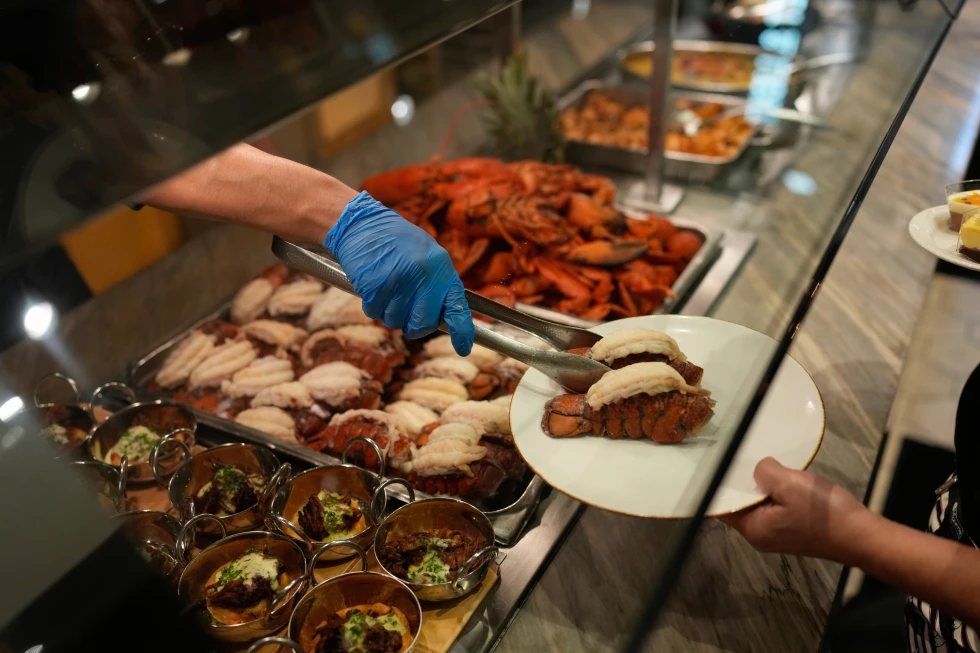
LAS VEGAS (AP) — Eighty years ago, the first Las Vegas buffet opened with the $1 western-themed Buckaroo Buffet, offering cold cuts and cheese. Today, visitors can spend as much as $175 on luxury buffets featuring lobster tail, prime rib, and limitless drinks.
Originally, buffets provided a quick and cheap dining option, allowing guests more time to spend on the casino floor. However, the number of buffets on the Las Vegas Strip has dwindled to around a dozen since many shut down during the COVID-19 pandemic and chose not to reopen due to rising costs.
Before it closed in 2020, the Carnival World Buffet at the Rio prided itself on being the largest in Las Vegas, featuring over 300 international dishes for around $30. Other iconic buffets, such as ARIA’s, which was known for its Indian cuisine, also shuttered, replaced by food halls offering a variety of meals from ramen to sushi.
As traditional buffets decline, many have been replaced by high-end culinary experiences that cater to a more demanding clientele. Longtime Las Vegas visitors often lament the loss of affordable buffets, which were a staple of the city’s culture.
Today’s buffets are seen as attractions, with high prices reflecting a shift in customer expectations towards quality and experience. Take for instance, the Palms’ A.Y.C.E Buffet, where diners can indulge in endless lobster and shrimp cocktails for a steep price while enjoying themed entertainment.
Jim Higgins, a local food tour guide, suggests that while buffets have adapted to changing tastes, the essence of the Las Vegas buffet will persist in some form. As Al Mancini, a prominent food journalist, puts it, 'The Las Vegas buffet will never die.' This sentiment reflects the enduring allure of the buffet experience, even amid significant transformation in the city's dining landscape.