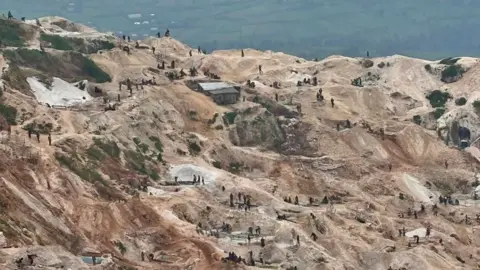
More than 200 people have been killed in a mine collapse in eastern Democratic Republic of Congo, rebel authorities have reported. The incident occurred in the town of Rubaya, where heavy rains caused the mine to give way, according to Lumumba Kambere Muyisa, the spokesman for the North Kivu region's rebel governor. The unfolding tragedy initially left the death toll uncertain. Among the victims were women and children involved in mining coltan, a vital mineral for producing electronics like smartphones and computers. A former supervisor emphasized the neglect of the site, which exacerbated the risks of such accidents and hindered rescue operations. Eyewitness accounts revealed that fewer than 20 survivors are receiving treatment following the disaster, with some families expressing their grief and disbelief at the loss of their loved ones. Governor Erasto Bahati Musanga visited survivors soon after the incident. The mine is crucial as it holds approximately 15% of the world’s coltan supply and half of the DRC's deposits, highlighting the urgent need for safety and proper regulation in the mining sector, particularly under the control of M23 rebels who have been accused of exploiting local resources since 2024.
Tragic Mine Collapse Claims Over 200 Lives in DR Congo
Tragic Mine Collapse Claims Over 200 Lives in DR Congo
A devastating mine collapse in Rubaya, eastern DR Congo, has resulted in more than 200 fatalities, with many women and children among the deceased. The catastrophe was attributed to heavy rains and poor maintenance of the mine, now under rebel control.
In a heart-wrenching incident, over 200 people died in a mine collapse in the town of Rubaya, eastern Democratic Republic of Congo, following heavy rainfall. Rebel authorities confirm that the site, which is poorly maintained and controlled by rebels, was being actively mined by men, women, and children, particularly for coltan, an essential mineral in electronics. As rescue efforts continue, the tragedy serves as a grim reminder of the dangers faced by artisanal miners in the region.