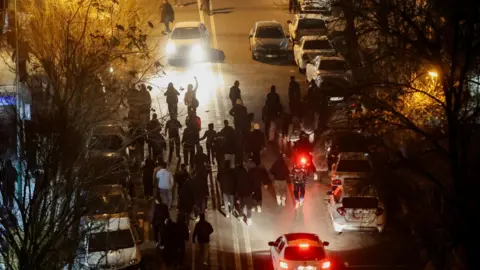
My friends are all like me. We all know someone who was killed in the protests.
For Parisa, a 29-year-old from Tehran, the crackdown by security forces in Iran earlier this month was unlike anything she had witnessed before.
In the most widespread previous protests, I didn't personally know a single person who had been killed, she said.
Parisa said she knew at least 13 people who had been killed since protests over worsening economic conditions erupted in the capital on 28 December and then evolved into one of the deadliest periods of anti-government unrest in the history of the Islamic Republic.
With one human rights group reporting that the number of people confirmed killed has passed 6,000, several young Iranians able speak to the BBC in recent days, despite a near-total internet shutdown, have described the personal toll.
Another protester, Mehdi, noted the unprecedented scale of turnout and violence. He witnessed multiple killings at close range, including a young man shot right in front of him.
The severity of the situation is exacerbated by the government's refusal to return bodies to families unless they either pay exorbitant fees or falsely corroborate that the deceased were associated with the security forces.
As the situation remains dire for ordinary Iranians caught in this turmoil, the international community watches with growing concern regarding human rights violations and the ongoing suppression of dissent.