The push to scrap the zones was led by Pierre Meurin from the far-right National Rally and supported by a coalition of opposition parties. Notably, writer Alexandre Jardin, who founded the movement Les #Gueux, has been an outspoken critic of the ecological policies saying they disproportionately affect low-income individuals. Jardin claimed the vote was a decisive moment for those against “punitive ecology,” urging members of the Assembly to consider the political fallout if they voted to retain the zones.
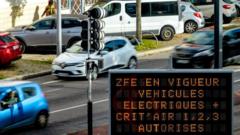
Since their inception in 2019 in response to air quality concerns, low-emission zones had expanded from 15 of France's most polluted cities to include all urban areas with populations exceeding 150,000, enforcing restrictions on older vehicles. Critics of the ZFEs, including leading figures from various political factions, described them as instruments of wealth disparity and called for a more equitable approach to environmental policies.
Despite government attempts to ease restrictions while preserving key zones in Paris and Lyon, the amendment was rejected. Proponents of the ZFEs, including Green and Socialist party members, have expressed concern over potential public health consequences, citing that air pollution is responsible for approximately 40,000 premature deaths in France annually. The proposal faces further hurdles, needing approval from the Senate and the Constitutional Council before becoming law.
The outcome of this vote highlights a contentious debate in France over environmental policy, social justice, and public health, with clear divisions noted among parties regarding the best way to reconcile these critical issues moving forward.
As this situation continues to develop, the future of France's environmental regulations remains uncertain, with a broader legislative vote expected in June.
Since their inception in 2019 in response to air quality concerns, low-emission zones had expanded from 15 of France's most polluted cities to include all urban areas with populations exceeding 150,000, enforcing restrictions on older vehicles. Critics of the ZFEs, including leading figures from various political factions, described them as instruments of wealth disparity and called for a more equitable approach to environmental policies.
Despite government attempts to ease restrictions while preserving key zones in Paris and Lyon, the amendment was rejected. Proponents of the ZFEs, including Green and Socialist party members, have expressed concern over potential public health consequences, citing that air pollution is responsible for approximately 40,000 premature deaths in France annually. The proposal faces further hurdles, needing approval from the Senate and the Constitutional Council before becoming law.
The outcome of this vote highlights a contentious debate in France over environmental policy, social justice, and public health, with clear divisions noted among parties regarding the best way to reconcile these critical issues moving forward.
As this situation continues to develop, the future of France's environmental regulations remains uncertain, with a broader legislative vote expected in June.