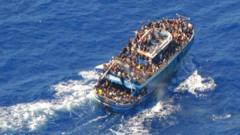
In June 2023, the Adriana, carrying around 650 migrants, capsized, resulting in one of the worst maritime disasters in recent memory. Survivors allege that the coastguards' actions caused the vessel to sink. A Piraeus Naval Court deputy prosecutor has brought charges against 17 members of the Hellenic Coast Guard, including the captain of the responding coast guard ship, following in-depth investigations that contradicted the official narrative.
The charges stem from the boat’s tragic sinking in international waters, although it occurred within Greece's assigned rescue zone. Eyewitness testimonies and investigations indicate that the coastguards were monitoring the Adriana for several hours prior to its capsizing. Reports suggest the vessel was not only overcrowded, having left Libya for Italy, but also inadequately assisted during its perilous journey.
Survivors recounted that the coastguard's efforts to tow the vessel allegedly led to its capsizing. They described harrowing experiences, including efforts to silence their testimonies once ashore, raising questions regarding the coastguards' conduct. With 650 passengers reported aboard, only 104 are confirmed to have survived the disaster.
As legal proceedings advance, Ahmad, a survivor now living in Germany, expressed cautious optimism over the accountability of the coastguards, stating, “I’m very happy they are eventually being held accountable for all they have committed, but until I see them in prison nothing has been done yet.”
The lawsuit against the coastguards has received broad support from rights groups and the joint legal representation of survivors and victims. Their legal team hailed the decision as a major step towards achieving justice, reflecting a growing recognition of the rights and humanity of migrants at sea.
The upcoming weeks will see the court consider whether these charges will lead to a full trial or be dismissed, spotlighting ongoing debates about the treatment of refugees in Europe and the responsibilities of coastguard authorities.
The charges stem from the boat’s tragic sinking in international waters, although it occurred within Greece's assigned rescue zone. Eyewitness testimonies and investigations indicate that the coastguards were monitoring the Adriana for several hours prior to its capsizing. Reports suggest the vessel was not only overcrowded, having left Libya for Italy, but also inadequately assisted during its perilous journey.
Survivors recounted that the coastguard's efforts to tow the vessel allegedly led to its capsizing. They described harrowing experiences, including efforts to silence their testimonies once ashore, raising questions regarding the coastguards' conduct. With 650 passengers reported aboard, only 104 are confirmed to have survived the disaster.
As legal proceedings advance, Ahmad, a survivor now living in Germany, expressed cautious optimism over the accountability of the coastguards, stating, “I’m very happy they are eventually being held accountable for all they have committed, but until I see them in prison nothing has been done yet.”
The lawsuit against the coastguards has received broad support from rights groups and the joint legal representation of survivors and victims. Their legal team hailed the decision as a major step towards achieving justice, reflecting a growing recognition of the rights and humanity of migrants at sea.
The upcoming weeks will see the court consider whether these charges will lead to a full trial or be dismissed, spotlighting ongoing debates about the treatment of refugees in Europe and the responsibilities of coastguard authorities.